Category: Art History Foundations: Art Prehistory to 1400s

  • Another Piece of Artwork, The Bangwa Queen, Waiting to Go Home

    Another Piece of Artwork, The Bangwa Queen, Waiting to Go Home

    This sculpture, known as the Bangwa Queen, is housed in the Dapper Foundation in Paris. It was gifted or stolen from the Bangwa grasslands region of what is now Cameroon by German colonial agent Gustav Conrau, then donated to Berlin’s Museum für Völkerkunde, purchased by American collector Harry A. Franklin in 1966, and sold by his daughter to the current possessor. A lawyer representing Bangwa king Don Fontem Asabaton and chief Fuatabong Achaleke says he’s written three times asking for information and dialogue over the Bangwa Queen sculpture, “‘We have received no substantive response, only requests for verification,’ Sullivan says. ‘As the party with power, resources and access to information, they have not given us the impression that they respect how meaningful these artifacts are to the community, nor that they intend to take us seriously.’”

    Bangwa people fear most that the Bangwa sculpture will be auctioned off to a private collector and lost forever. The director of the Dapper Foundation, Christiane Falgayrettes-Leveau, says the organization has no intention of selling any items from its collection, “The Bangwa sculpture, like other works in the collection, will be part of international exhibitions,” she says. “The closure of the Paris building does not signal an end to the Dapper Foundation’s activities. In line with our mission for the past 30 years, we will mount exhibitions of ancient and contemporary art to give more visibility to the cultures of Africa and of its diasporas.” This justification that the art is for public appreciation is common. James Cuno believes it as he states in Culture War, “In an era of globalization that is nonetheless marked by resurgent nationalism and sectarianism, antiquities and their history should not be used to stoke such narrow identities. Instead, they should express the guiding principles of the world’s great museums: pluralism, diversity, and the idea that culture shouldn’t stop at borders” The popular discussion with the Parthenon Sculptures contains the same case with the British Museum saying that they “wholeheartedly committed to respectful collaboration worldwide, to sharing and lending the collection, and working in partnership for the benefit of the widest possible audience.”, according to the British Museum’s website

    Is this argument enough to keep artwork from their original homelands? Is it enough to keep the Bangwa Queen in the Dapper Foundation’s hands? Or are organizations like the Dapper Foundation and the British Museum keeping the artwork from their homelands for their profit. Now of course some museums will say that they don’t profit off of these specific pieces, but are they not profiting by the popularity and attention it brings them? I would say they do. By keeping meaningful and famous pieces for themselves, they are recognizing the value the pieces have to the culture, while simultaneously rejecting the moral ties to that culture they claim to appreciate so much. It’s not for any museum to decide what is best for the public if that means disrespecting the culture where their art is from. The Bangwa Queen, along with all the other once stolen artifacts should be returned to their origin upon request. By keeping meaningful and famous pieces for themselves, they are recognizing the value the pieces have to the culture, while simultaneously rejecting the moral ties to that culture they claim to appreciate so much.

    It’s not for any museum to decide what is best for the public if that means disrespecting the culture where their art is from. The Bangwa Queen, along with all the other once stolen artifacts should be returned to their origin upon request.

    Citations:

    Catherine Hickley, C. (2018, January 12). Paris’s Dapper Foundation stalls talks 

         over Cameroonian sculpture. The Art Newspaper. Retrieved March 23, 2024, 

         from https://www.theartnewspaper.com/2018/01/12/ 

         pariss-dapper-foundation-stalls-talks-over-cameroonian-sculpture

    Cuno, J. (2014, December). Culture war. Foreign Affairs. Retrieved March 23, 

         2024, from https://www.foreignaffairs.com/articles/africa/ 

         culture-war?utm_medium… 1 of 14 10/7/21, 8:28 AM

    The British Museum. (n.d.). The parthenon sculptures. The British Museum. 

         Retrieved March 23, 2024, from https://www.britishmuseum.org/about-us/ 

         british-museum-story/contested-objects-collection/parthenon-sculptures

    Greenberger, A. (2024, February 20). Looting, plundering, and more: 20 cultural 

         treasures that have faced claims of theft. Art News. Retrieved March 23, 

         2024, from https://www.artnews.com/list/art-news/artists/ 

         most-important-looted-plundered-works-1234584727/ 

         senegal-sword-france-return-museum-of-black-civilizations/
  • The Popularity Of  Sexist Theories In Prehistory

    The Popularity Of  Sexist Theories In Prehistory


    Man The Hunter
    is a symposium published in 1968 by Richard B. Lee and Irven DeVore. It’s notorious for its sexist evolutionary views that essentially claims that men were the hunters and women were nearly supporting roles. This theory became popular and was promoted through editorial cartoons, tv shows, and other media, for the public to digest and accept as truth. However, this narrative of men being the hunters is simply false. Despite this, the lens of which Man The Hunter was created from, is commonly shared, and is used just to discredit women.

    There’s evidence proving that women had the physical capacity to hunt alongside men and did. If you look at the biological differences between the two sex’s, you can see there are advantages with both that could help with hunting. Men typically have larger hearts, lungs, and more muscle mass, whereas females have better endurance.

    Endurance is essential to persistent hunting which is hypothesized to be how humans hunted prey in the past. There is also evidence of equal roles between sexes by the skeletons of our ancestors.

    Meaning that since there are similar damages to between the skeletons, then they were doing the same activities. Despite the clear evidence of Man The Hunter being incorrect, it was still the catapult of a set of beliefs that men drove evaluation by their hunting.

    Venus of Willendorf is a prime example of how people can use bias lenses to generate theories on prehistoric ancestors and their values. It’s a common belief that Venus of Willendorf (whose modern name from the 20th century derives from the goddess of love and beauty), was created by men for aphrodisiacal purposes. Another popular explanation of the purpose of Venus of Willendorf, is that she was a fertility figure, whether it was a good-luck totem in hopes of women becoming fertile, or fertility being monumented because it was so valued at the time. This reasoning was supported by the exaggerated reproductive physical features of the woman, “The most conspicuous elements of her anatomy are those that deal with the process of reproduction and child rearing. The artist took particular care to emphasize her breasts, which some scholars suggest indicates that she is able to nurse a child.”, (Dr. Zygmont, para. 17). These reasons are as well as the next but why it’s the most commonly known explanation is something we have to evaluate.

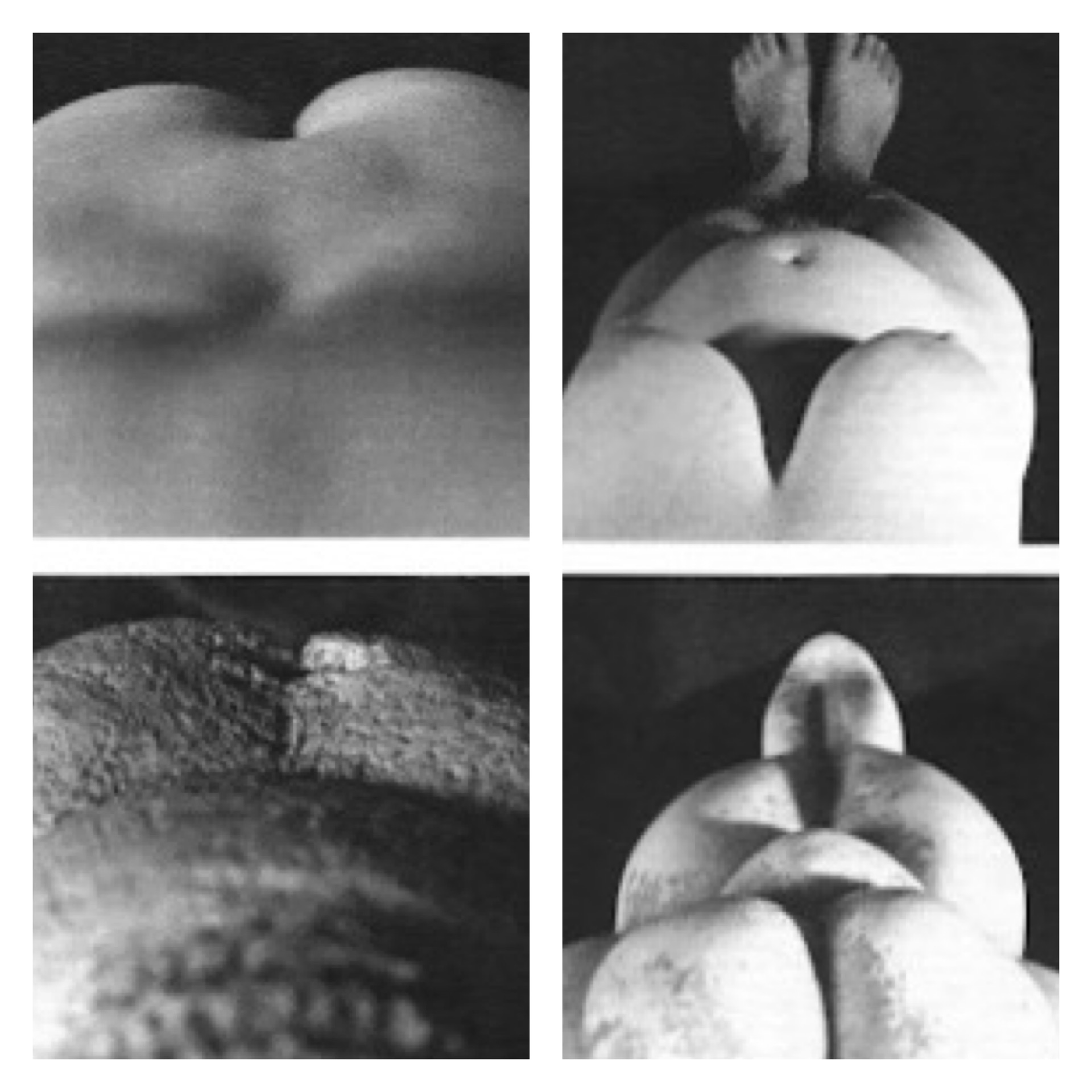
    A different explanation suggests a woman created the piece as a self portrait. You can see from the contrasting images that the sculpture looks very similar to how a six month pregnant woman would look down at herself (since mirrors weren’t invented yet). n contrast to what Dr. Zygmont stated,

    “If the face was purposefully obscured, the Paleolithic sculptor may have created, not a portrait of a particular person, but rather a representation of the reproductive and child rearing aspects of a woman.”, (para. 19). A woman looking down at herself would not be able to see her own face or hands while she was sculpting.

    There are multiple reasons why a woman would want to create a self portrait while pregnant. You can imagine that like any child who draws in the sand with their finger, art comes naturally to us and we simply have an urge to recreate what we see. This woman could have also created this sculpture in an educational lens to demonstrate to other young women what changes their bodies would go through. This is such a large aspect of womanhood, and to leave it out of the narrative because of one’s own sexist biases is fallacious.

    What these anti-feminist theories all have in common, is that they stem from a harsh set of beliefs of gender binary roles. They hardly consider women being valued for anything more than their bodies or their contribution to domestic chores. These sexist assumptions are not just harmless ideas, they have an effect on society. Look at the time at which Man the Hunter was published; it was right after a large rise in working wives during the 1950s. It’s hard to believe that “man the hunter”, “man the provider”, “man the breadwinner”, wasn’t a biased opinion based off of this event.

    One can imagine the movement would have taken off quicker if not for this claim that women’s domestic role comes natural to them because “that’s the way it’s always been”. 

    When presented with a feminist idea like Venus of Willendorf being a self portrait, it’s branded as “extreme liberalism” and “unlikely”, discrediting women and their ability. It’s important to ask what prehistoric art could have meant to our ancestors so we have a better understanding of where we came from, but it’s just as important to look at our ideas of what it meant to reflect on our generation’s biases.

    Citations

    • Oocbock, C., & Lacy, S. (2023, November 1). The theory that men evolved to hunt 

         and women evolved to gather is wrong. Scientific American. Retrieved 

         February 21, 2024, from https://www.scientificamerican.com/article/ 

         the-theory-that-men-evolved-to-hunt-and-women-evolved-to-gather-is-wrong1/

    • Zygmont, B., Dr. (n.d.). Nude woman (Venus of Willendorf). Khan Academy. 

         Retrieved February 21, 2024, from https://www.khanacademy.org/humanities/ 

         prehistoric-art/paleolithic/paleolithic-objects/a/venus-of-willendorf

  • Globalization Enabled by Simplistic Depictions of Deities

    Globalization Enabled by Simplistic Depictions of Deities

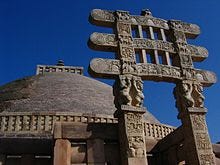
    Throughout history, religions have often used depictions of deities to visually represent their beliefs and values. Most of which have visuals containing realistic humanistic figures, others have symbols to represent their deities and/or their teachings. Take Buddhism in the third century BC; They decided to use symbols to represent Siddhartha Gautama because they thought he had transcended his physical body. These symbols include his footprints which represent Siddhartha Gautama leaving the palace and renouncing worldly goods, the wheel of law that represents him and his preachings, and a linden tree where he is said to find enlightenment. You can view such symbols on toranas and other ancient buddhist architecture. This culture among many others predominantly dedicated buildings to showcase art of their deities and the importance of these ideas to the community. 

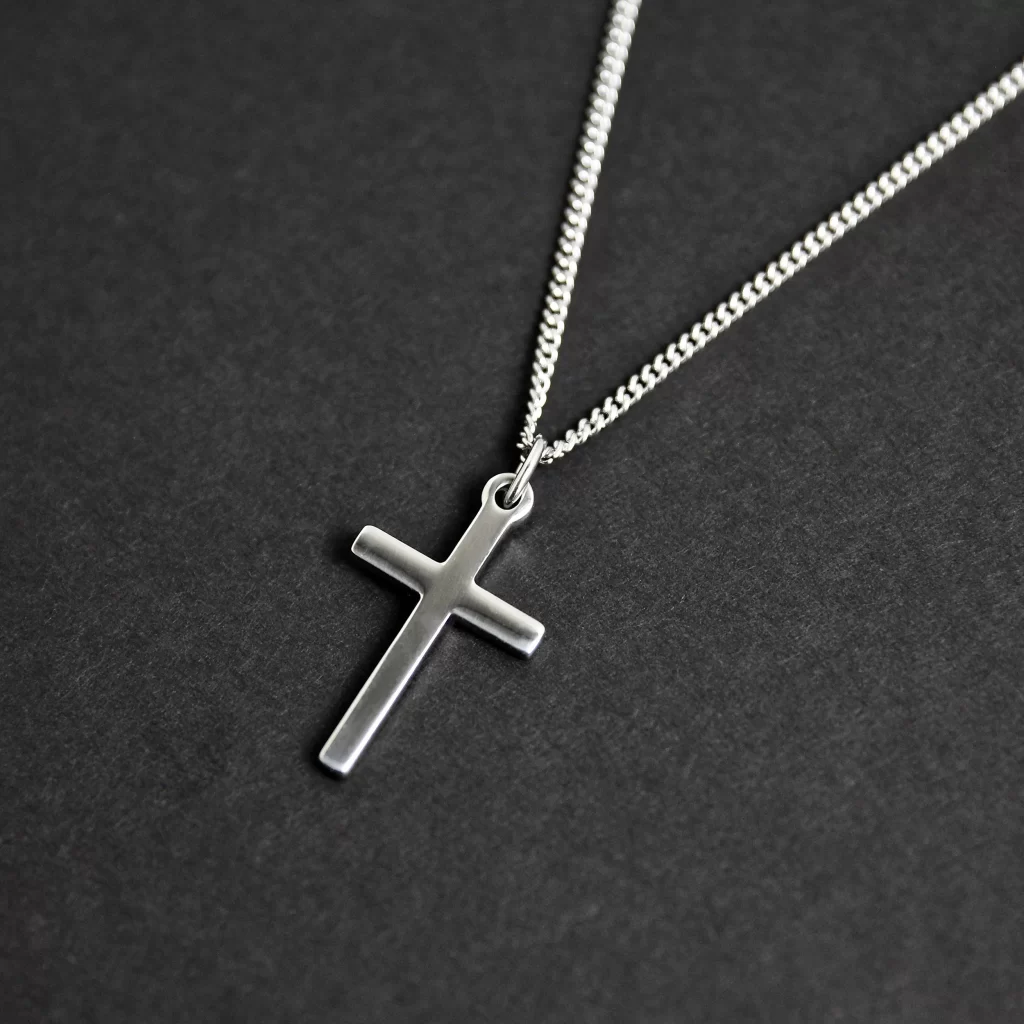
    As time progressed, attitudes towards one’s relationship with religion have changed in the United States. Take Christianity, instead of building large gothic cathedrals, we build more modern simpler buildings that can be changed to serve a new purpose if needed. We also use simple religious symbols, like the cross, to wear as jewelry. It’s also more common for this form of representation of deities because of mass production. Even if these religions didn’t have this reasoning behind their depictions of their deities, they still benefit from their easy marketing abilities. But despite society missing grand architecture and beautiful realistic depictions of one’s deities, having simplistic jewelry enables intimate and individualized connections to religious beliefs and values that are more easily able to spread around the world.

  • Contemporary Manuscript Illumination of P for Patroclus

    Contemporary Manuscript Illumination of P for Patroclus

    The manuscript is a P to stand for Pactrclous, an overlooked character in Achilles. His moment of truth lies when Achillies is too stubborn to fight. Pactrouclous puts on Achilles’ armor and pretends to be him so the men follow his lead into battle. Pactroclous then dies a hero. 

    Like many manuscripts this story is told through pictures. These illustrations lie on the outskirts of the border. The frames of the pictures are circular with a golden background. This is a memento to golden hellos you see in other artwork from this time period. This symbol was expressed on religious people, people who were often considered more significant. By keeping that same symbol in this manuscript, it gives Patroclus a sense of significance or glory that he rightly deserves.

    Gold isn’t the only color that adds to the manuscript theme. Blue and red were often used in manuscripts as well. Since titles weren’t distinguishable from their font size they used color to differentiate instead. Red was what jumped out of the page at you when reading, so making manuscripts in red was common. That’s why in this manuscript you’ll see red used in the very center. 

    The red section of the P also adds a new unique element of shape to the letter that normally wouldn’t be there today. The letter’s thickness is also displaying aspects of manuscripts in the Middle Ages. The thickness emphasized in the down strokes was the only option due to their writing utensils available. The letter is also embellished with random circular shapes along with foliage details. Drawings of flowers and other plants were often used in manuscripts and inspired me to implement them in mine. These particular plants slightly represent laurel wreaths which goes along with the ancient Greek theme.

  • Classical Influence of Intergenerational Cultural Transmission in Disney

    Classical Influence of Intergenerational Cultural Transmission in Disney

    Photo by My Favorite Planet.com

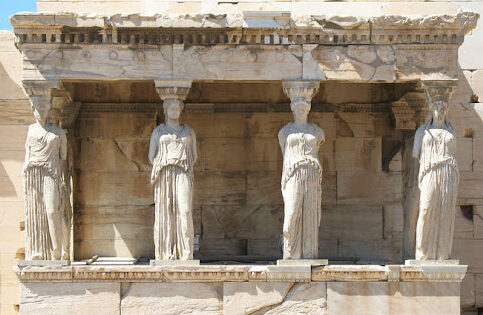
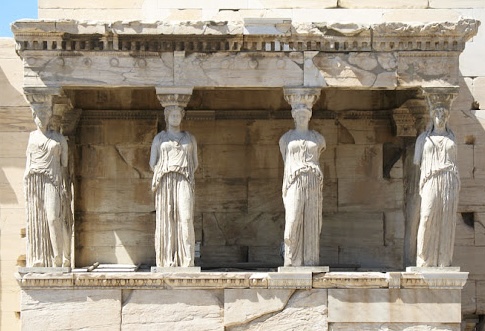
    The classical era has made its stamp on today’s modern world of art, but not just by the influence of fancy pillars on esteemed buildings. Its influence branches further than the physical appearance of architecture and sculptures, it reaches the virtues and values we uphold today. One example is their caryatids, these sculptures serve multiple purposes: beauty, support, and a symbol of harmony. If you look at the Erechtheion, you’ll see that they’re unified by appearance and stance that creates a sense of order and peace. The way the women have their weight shifted on their outer legs provides the assurance of support and therefore adds to the sense of united peace. “This is a sort of sensitivity to harmony, balance…” Zucker, S., & Harris, B express. This technique used to represent these ideals is so effective that we imitate it in our art today. We have more tools than ever to pass down groups’ cultural morals and values to new generations such as animation. The Disney movie Brave used it to tell a story of what happens when you don’t have that unity. 

    that they should be the pillars on which the peace of the land rested.

    In Brave, the mother Elinor is trying to teach her daughter Merida what happens if you don’t fulfill your duties as a political figure. She tells a story of an ancient kingdom, “… ruled by a wise and fair king who was much beloved. And when he grew old he divided the kingdom among his four sons. That they should be the pillars on which their piece of land rested.” Andrews, M & Chapman, B. (Directors). [13:10:00]. As Elinor tells the story she physically builds this kingdom with a chess board supported by four chess pieces under each corner. The chessmen she picks are white and are well detailed coincidentally alike how we view classical caryatids today. However one chessman is black and is clashing with the other three white pieces, it is this piece that represents the antagonist of the story at hand, “… But the oldest prince wanted to rule the land for himself, he followed his own path and the kingdom fell, from war and chaos and ruin.” As she recounts the kingdom’s demise, she snatches the black chessman from underneath the chess board and it tumbles to the ground along with all the other chess pieces who once relied on the foundationally chessmen to stay atop the board. Physically showing how imbalance, lack of order, or lack of symmetria, causes chaos. 

    He followed his own path and the kingdom fell

    These beliefs were once displayed on the architecture of buildings in Athens for all to see. All the youth of Athens had to do to see the virtues of their community was to walk outside. We don’t have as detailed architecture today to create rich storytelling for children, so we rely on other means. As a form of education and storytelling, animation has made a powerful impact on children’s lives. It’s no wonder they’ve looked back at the classical era for symbolism for intergenerational cultural transmission.

    Citations

    Andrews, M. & Chapman, B. (Directors). (2012). Brave [Film]. Walt Disney Pictures, Walt Disney Studios Motion Pictures.

    Zucker, S., & Harris, B. (n.d.). The Athenian Agora and the experiment in 
    democracy. Khan Academy. Retrieved April 30, 2024, from 
         https://www.khanacademy.org/humanities/ap-art-history/ancient-mediterranean-ap/ 
         greece-etruria-rome/v/athenian-agora 

    Zucker, S., & Harris, B. (n.d.). The Erechtheion. Khan Academy. Retrieved April 
         30, 2024, from https://www.khanacademy.org/humanities/ 
         ancient-art-civilizations/greek-art/classical/v/erechtheion?modal=1