Assignment
| Formal | texture, balance, color, repetition, contrast |
| Technical | create a substructure using foilwork at hand sized scale (5-10″)additive and subtractive surface methodswork with a soft material that it made permanent through low temperature heating |
| Conceptual | create a hybridized form that has not been seen before using know textures and color |
Guidelines:
- Using white Sculpy polymer clay your will combine together 2 food items into a hybridized food item. The material will be heated to 275 degrees farenheit per 1/4 inch of thickness for 1/2 hour.
- This closed form should have volume and shape.
- The interior will be created with foil and then the Sculpy will be formed over that structure.
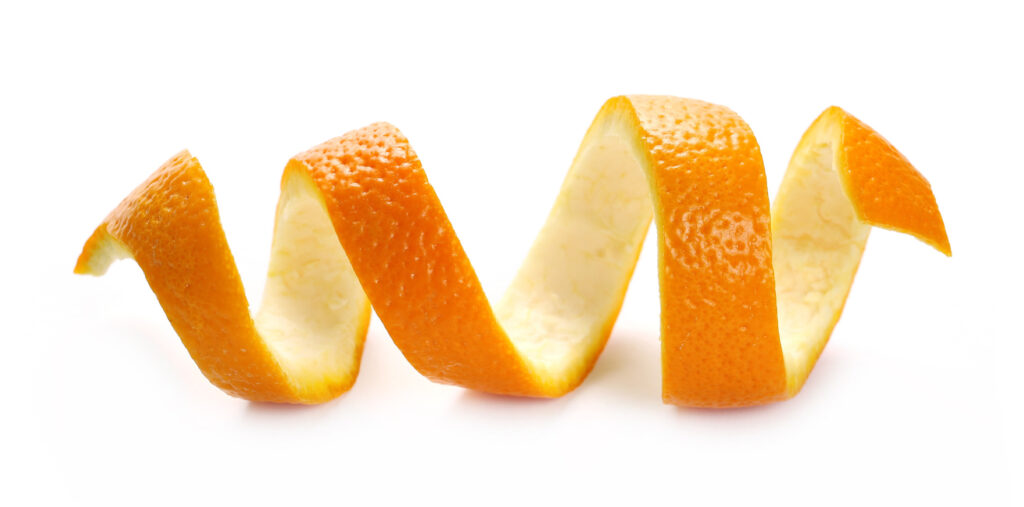
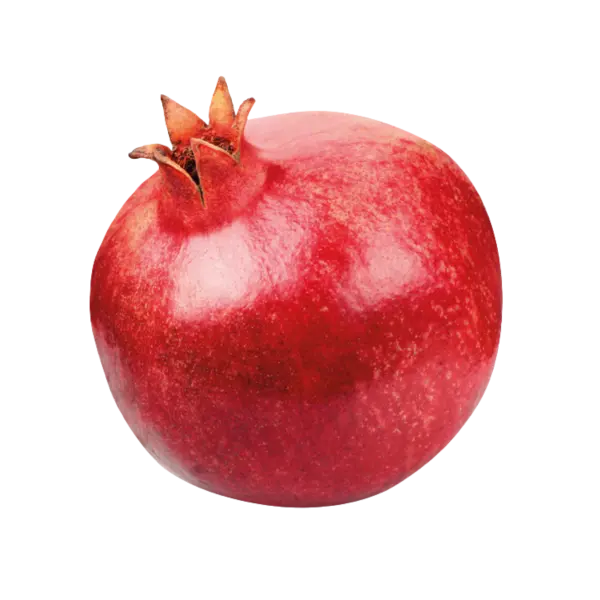
- You should have a visual reference for the forms being used.
- The final hardened work will be painted for final effect.
- Images will be posted to your website with explanation.
Process
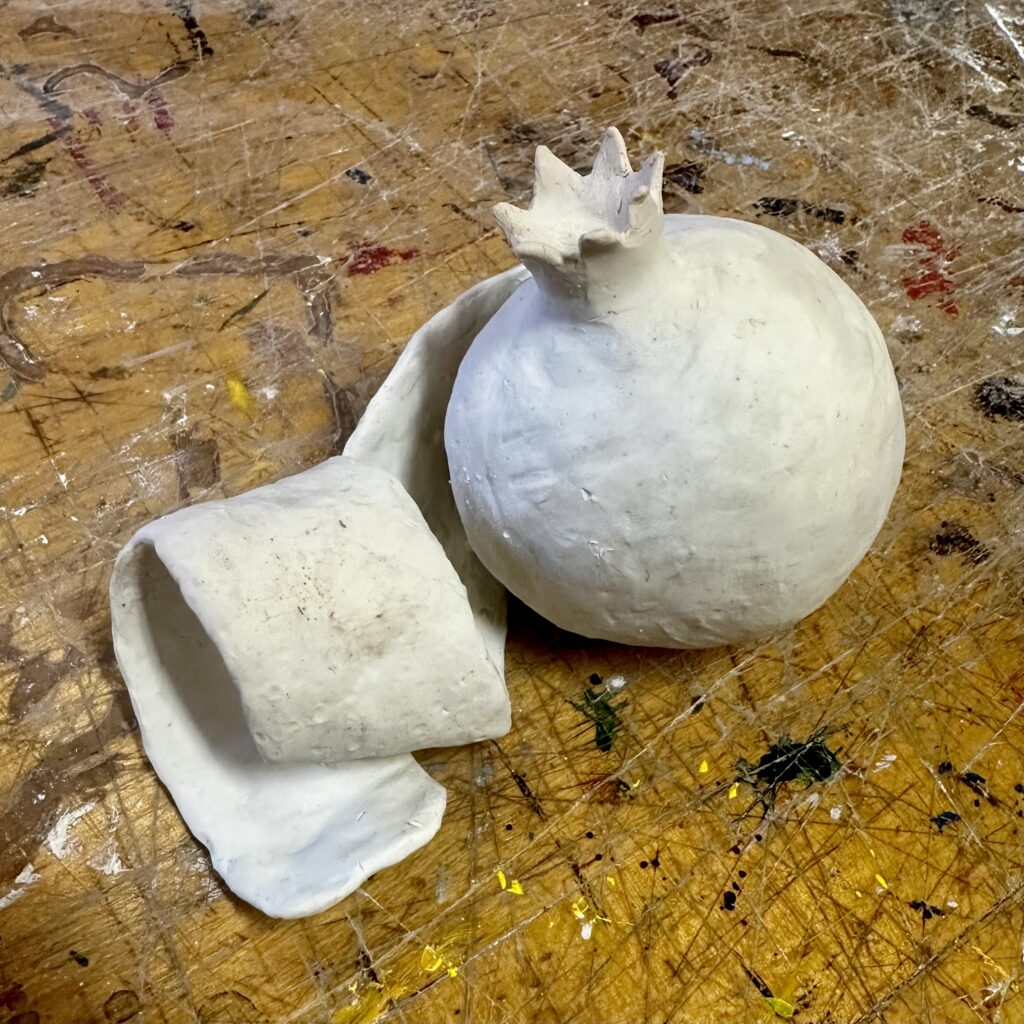
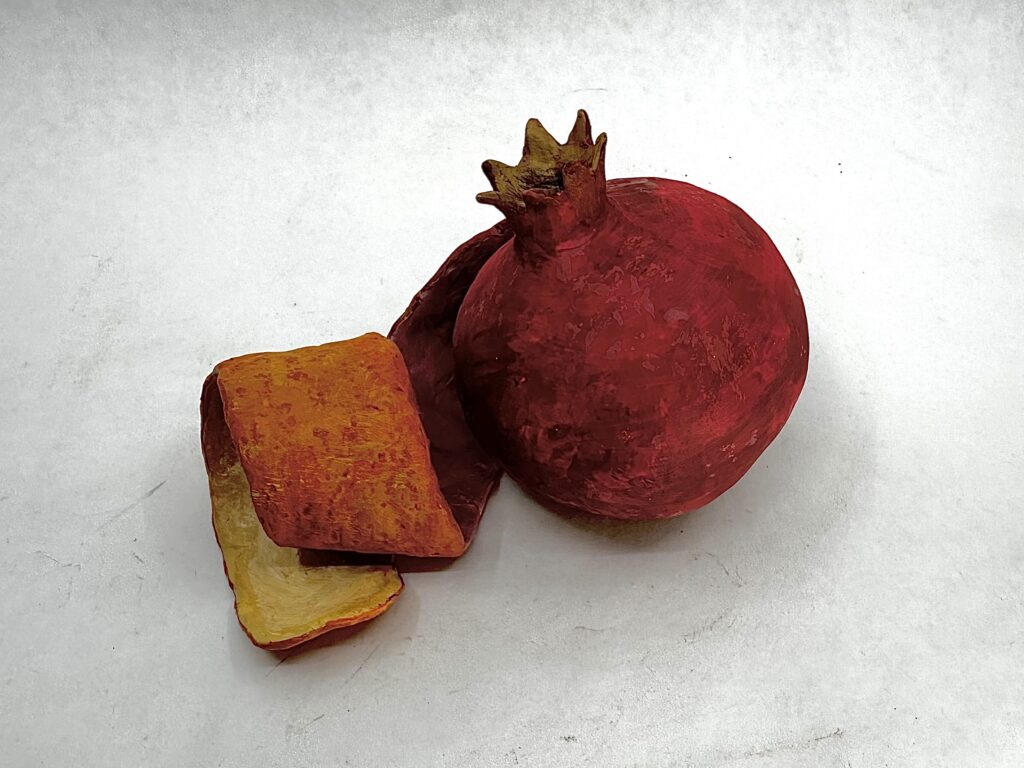
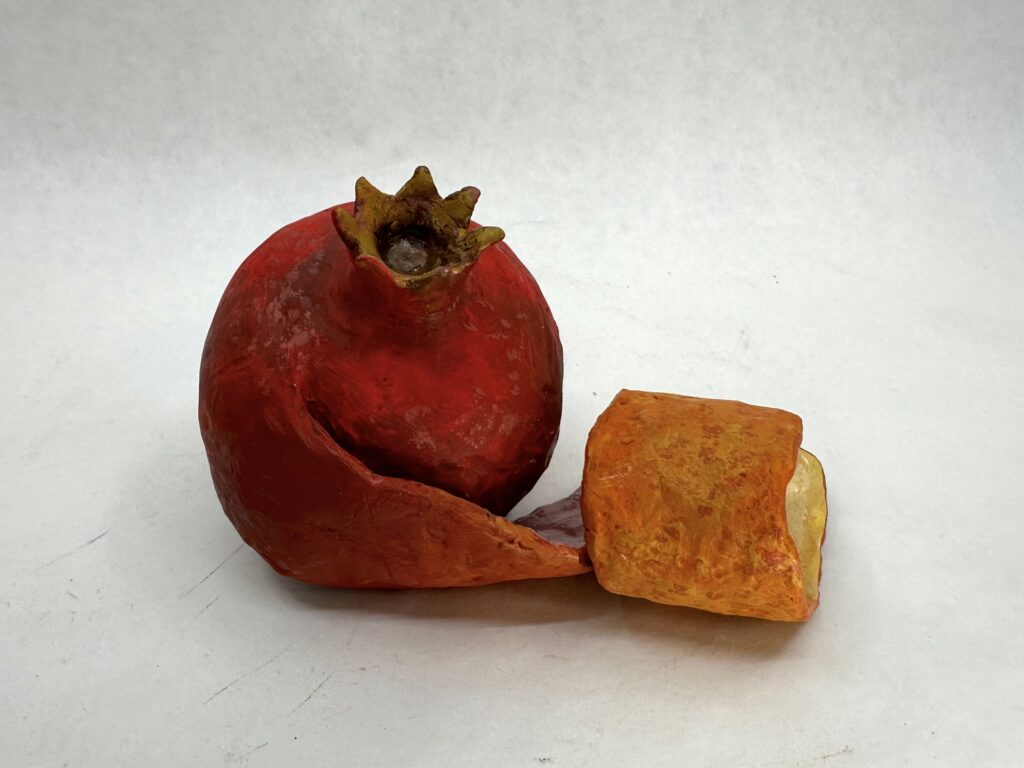
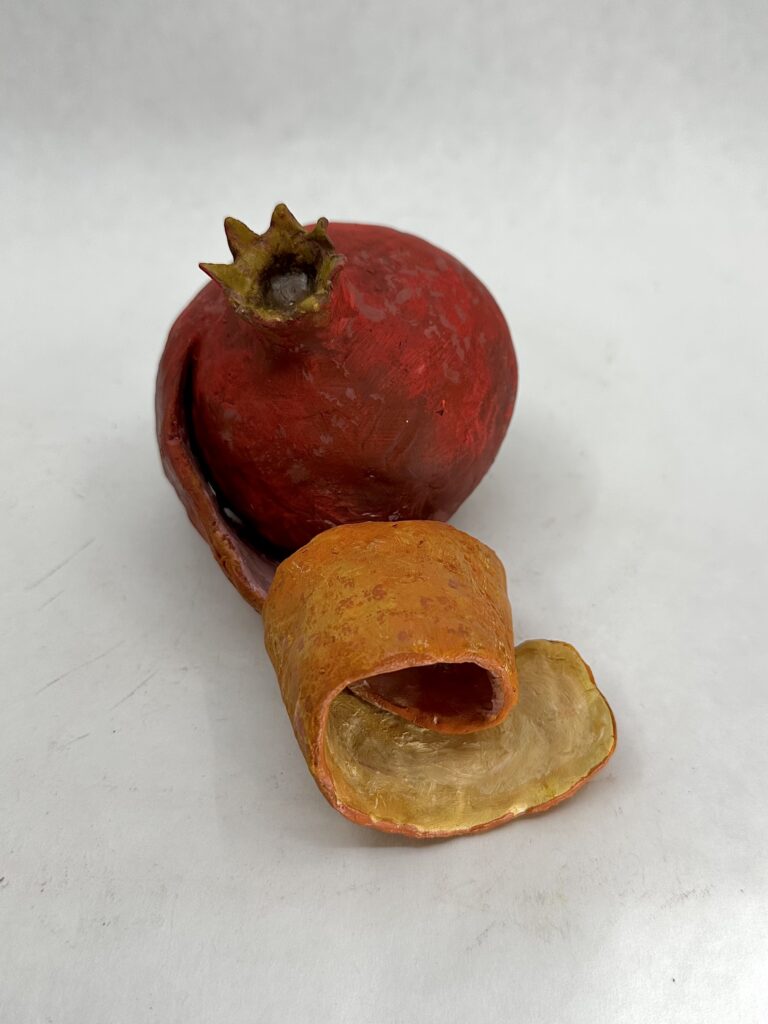
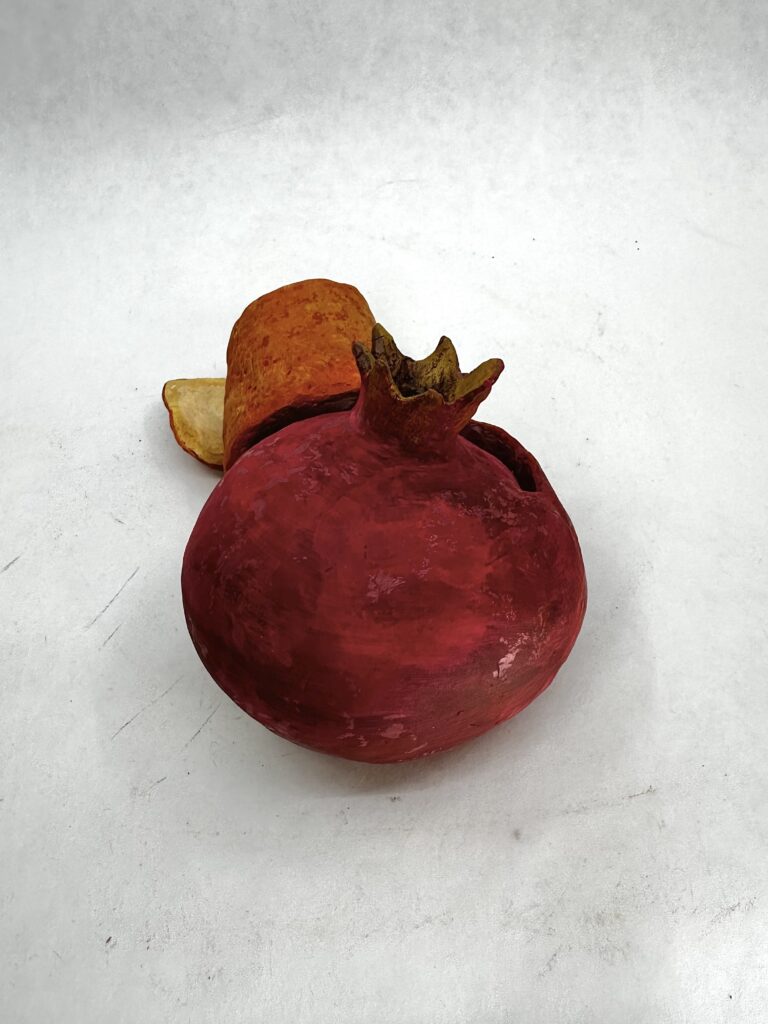
I didn’t know how to pick my hybridized food. So I just thought of colors I’d like to paint instead, seeing as I neglect the painting process until after I build the forms. I landed on a pomegranate and orange because I thought the analogous colors would blend nice together. I decided to have an orange peel off from the pomegranate and use it as a ribbon to create interest. Then I could create a nice ombre effect as I transition from a magenta into orange color.
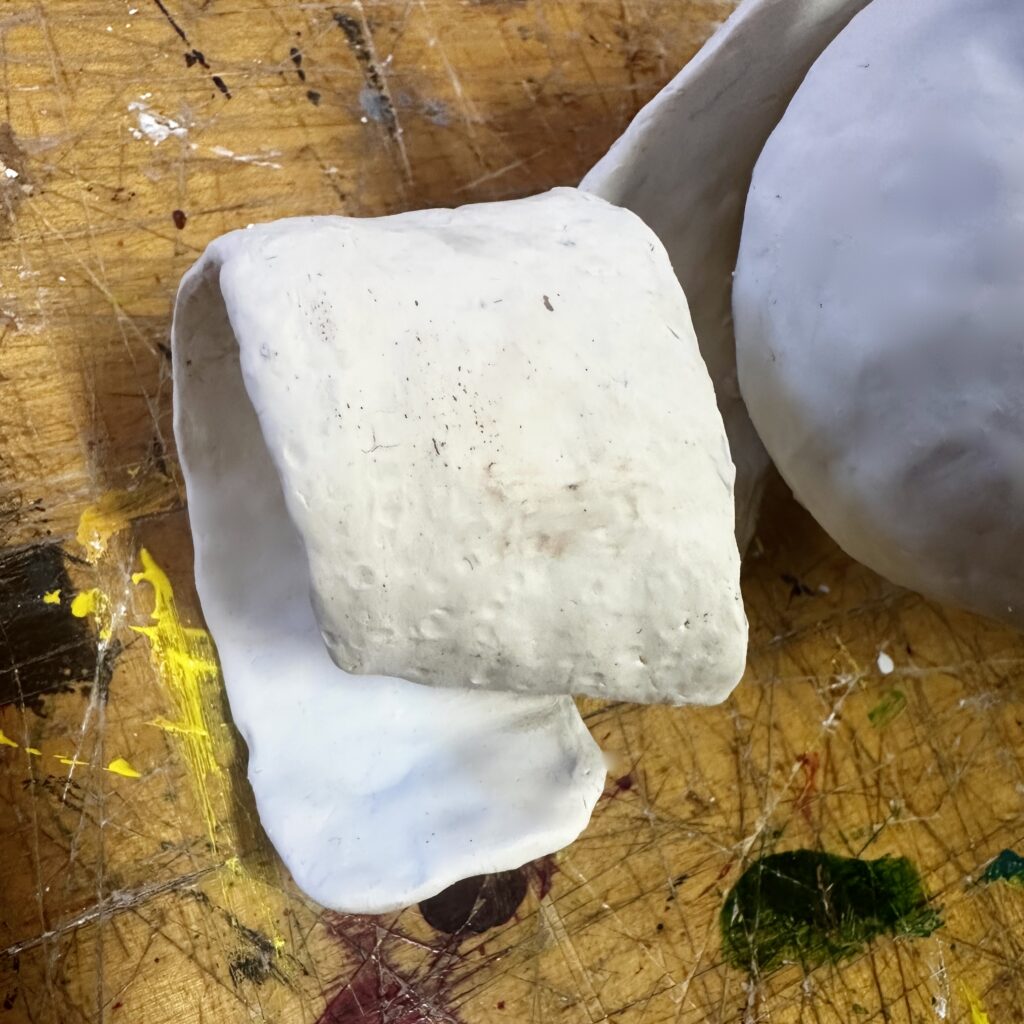
I started by rolling tin foil into a ball. Luckily, I didn’t need to make it perfectly sphere since I would be going over it with the oven-bake clay later. Then I folded some more tin foil into a strip and weaved one end of it into the ball then curled it. After, I put a layer of clay onto the form, removed any excess clay that made lumps, and used a small dowel-like tool to help smooth out the surface. To make the stem, I repeated 7 relatively flat triangles on top of the pomegranate creating a fanned out ring. Pomegranates come in different sizes, but I noted most have 6-7 triangles and have the width of the stem roughly a third of the width of the whole fruit. Observing references helped make the fruit look a lot more naturalistic. Before firing the piece, I made sure to add little circular indents to the orange peel to give it the pore-like texture they have. This would also help me dry brush later on to make the pores darker than the rest of the peel.
Final Product
This piece turned out to be the most dynamic piece I’ve made in this course. Brainstorming the painting process first proved effective, I’m much better at planning the actual shape of the form so prioritizing the aspect I’m worse at made it seem like it was less of an after thought and more well balanced. I enjoyed using the warm colors especially because of the curling peel. The shadows of the form and the colors chosen, make the peel have high color contrast. Form wise, I think the asymmetrical, chaotic gestural movement of the peel contrasts well against the very stagnate symmetrical pomegranate. The concept of a more chaotic form merging with a more stagnate form is interesting to me.
Leave a Reply