Through the 17th and 19th century, Europe and the United States were in a time of revolution and unrest. The Rococo, Neoclassicism, Romanticism, and Realism were movements all responding to the instability of their environment at the time. Neoclassicism and Romanticism in particular had a polar difference in reaction to their climate.
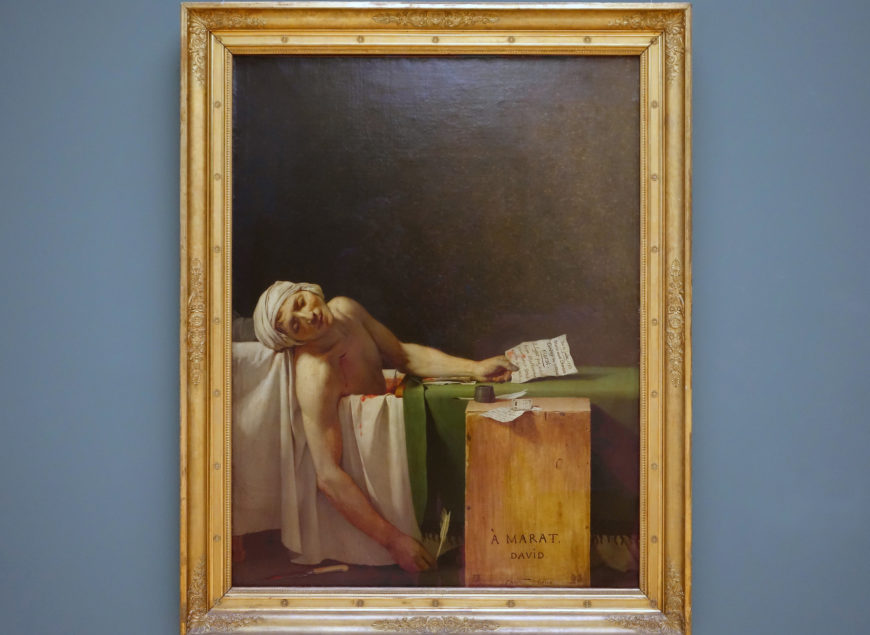
Neoclassicism was more action focused. The art primarily was propaganda and was trying to sway you to take a firm stand either with or against the monarchy. Jacques-Louis David, a revolutionary and close to the Jacobins, used art to glorify the revolutionists in their sacrifice for freedom. In The Death of Marat, David portrays his friend as an intellect, dying with pen in hand, aligning itself with enlightenment ideals. Writing of course what we assume are texts speaking out and slandering the monarchy. The audience hence obtains the impression that while working selflessly for a heroic cause, the monarchy exemplifies its overreach and ruthless power to suppress radicalists. Which is the goal for radicals like David who want there to be an uproar and sway public opinion in favor of the revolution.
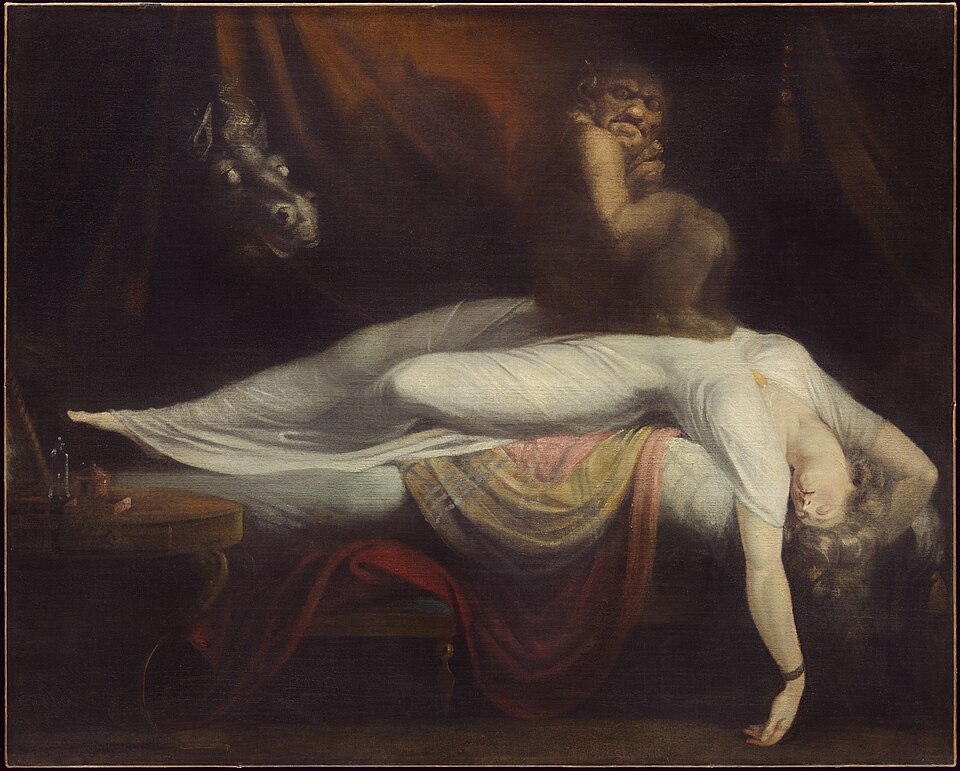
Romantics, on the other hand, were less concerned with Neoclassicism’s rational clarity and instead embraced ambiguity, emotion, and raw reactions to the lack of stability during that period. Henry Fuseli’s The Nightmare shows these values well. The symbolism of the horse, representing sleep, and the demonic creature on the lady’s chest, representing nightmares, is the clearer part of the painting. Whether this sleep is eternal or temporary is more subjective, however. This is exactly the type of reflection Fuseli wants us to have; he wants us to reflect on the weight of the chaos of their society.
The contrast in these two movements is stark when you compare what type of sleep each character is in. One is clear depiction of a real murder; the other is a fantasy-like subjective sleep. The difference between these two portrayals of sleep reveals how Neoclassicism focuses on concrete events and collective ideals, whereas Romanticism explores personal uncertainties and emotions.
Citations
Dr. Noelle Paulson, Noelle, Dr. “Henry Fuseli, The Nightmare.” Smart History,
smarthistory.org/henry-fuseli-the-nightmare/. Accessed 15 May 2025.
Gersh-Nesic, Beth, Dr. “Neoclassicism, an introduction.” Kahan Academy,
www.khanacademy.org/humanities/renaissance-reformation/rococo-neoclassicism/
neo-classicism/a/neoclassicism-an-introduction. Accessed 14 May 2025.
“The Nightmare.” Wikipedia, Wikimedia Foundation, 28 Apr. 2025, en.wikipedia.org/
wiki/The_Nightmare. Accessed 14 May 2025.
Zucker, Steven, Dr, and Beth Harris, Dr. “A beginner’s guide to the Age of
Enlightenment.” Kahan Academy, www.khanacademy.org/humanities/
renaissance-reformation/rococo-neoclassicism/rococo/a/
a-beginners-guide-to-the-age-of-enlightenment. Accessed 14 May 2025.
Leave a Reply