Category: Art History Foundations: 1400-1940

  • Two Slumbers

    Through the 17th and 19th century, Europe and the United States were in a time of revolution and unrest. The Rococo, Neoclassicism, Romanticism, and Realism were movements all responding to the instability of their environment at the time. Neoclassicism and Romanticism in particular had a polar difference in reaction to their climate. 
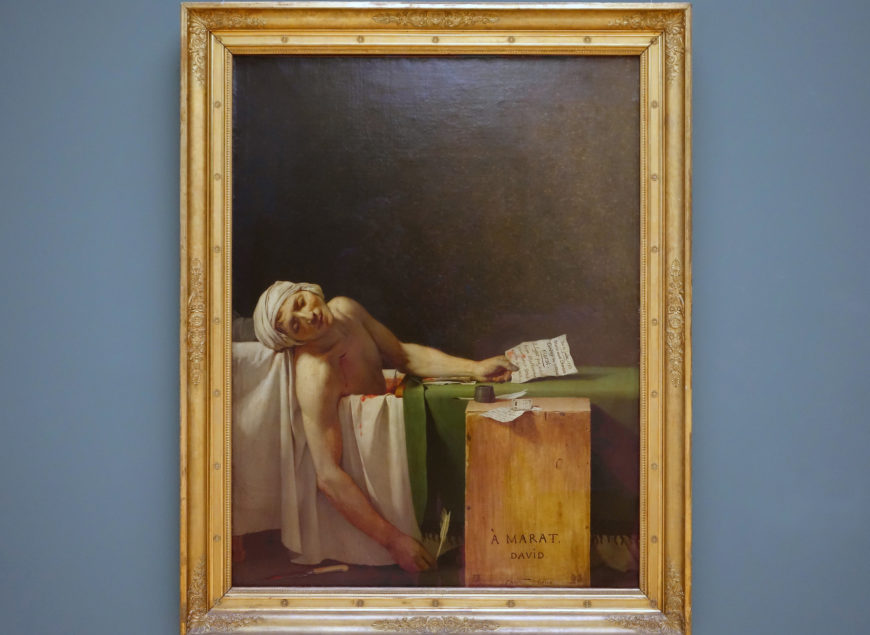
    Jacques-Louis David, Death of Marat, 1793, oil on canvas

    Neoclassicism was more action focused. The art primarily was propaganda and was trying to sway you to take a firm stand either with or against the monarchy. Jacques-Louis David, a revolutionary and close to the Jacobins, used art to glorify the revolutionists in their sacrifice for freedom. In The Death of Marat, David portrays his friend as an intellect, dying with pen in hand, aligning itself with enlightenment ideals. Writing of course what we assume are texts speaking out and slandering the monarchy. The audience hence obtains the impression that while working selflessly for a heroic cause, the monarchy exemplifies its overreach and ruthless power to suppress radicalists. Which is the goal for radicals like David who want there to be an uproar and sway public opinion in favor of the revolution.

    Romantics, on the other hand, were less concerned with Neoclassicism’s rational clarity and instead embraced ambiguity, emotion, and raw reactions to the lack of stability during that period. Henry Fuseli’s The Nightmare shows these values well. The symbolism of the horse, representing sleep, and the demonic creature on the lady’s chest, representing nightmares, is the clearer part of the painting. Whether this sleep is eternal or temporary is more subjective, however. This is exactly the type of reflection Fuseli wants us to have; he wants us to reflect on the weight of the chaos of their society.

    The contrast in these two movements is stark when you compare what type of sleep each character is in. One is clear depiction of a real murder; the other is a fantasy-like subjective sleep. The difference between these two portrayals of sleep reveals how Neoclassicism focuses on concrete events and collective ideals, whereas Romanticism explores personal uncertainties and emotions.
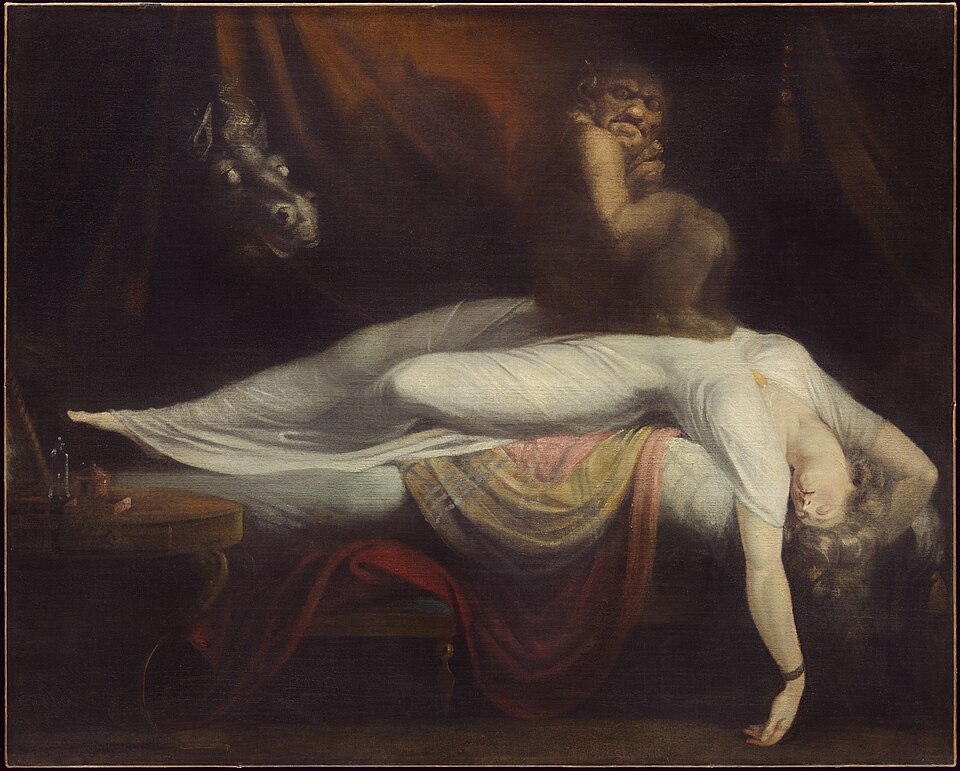
    Henry Fuseli, The Nightmare, 1781, oil on canvas

    Citations

    Dr. Noelle Paulson, Noelle, Dr. “Henry Fuseli, The Nightmare.” Smart History,
         smarthistory.org/henry-fuseli-the-nightmare/. Accessed 15 May 2025.

    Gersh-Nesic, Beth, Dr. “Neoclassicism, an introduction.” Kahan Academy,
         www.khanacademy.org/humanities/renaissance-reformation/rococo-neoclassicism/
         neo-classicism/a/neoclassicism-an-introduction. Accessed 14 May 2025.

    “The Nightmare.” Wikipedia, Wikimedia Foundation, 28 Apr. 2025, en.wikipedia.org/
         wiki/The_Nightmare. Accessed 14 May 2025.

    Zucker, Steven, Dr, and Beth Harris, Dr. “A beginner’s guide to the Age of
         Enlightenment.” Kahan Academy, www.khanacademy.org/humanities/
         renaissance-reformation/rococo-neoclassicism/rococo/a/
         a-beginners-guide-to-the-age-of-enlightenment. Accessed 14 May 2025.
  • The Art of The Game

    The High Renaissance is known for its prioritized values in harmony, balance, and ideal beauty, but later movements broke from these ideals. Mannerism and Baroque responded to changing times with very different values, intellect and ambiguity, and emotion and accessibility. These differences are clear when comparing how each depicts a tabletop game.

    Mannerism held strong themes of intellect, poise, ambiguity, and elegance, attributes typically associated with elite, high-ranking social groups. The movement’s elegance can be attributed to the economic, social, and political shifts of the 16th century. These themes likely reflect the rising social status of artists and the changing tastes of powerful patrons. While Mannerism was very similar to the High Renaissance in its emphasis on elegance, it differed in its lack of balance. This imbalance stemmed partly from the tension of the time, especially the growing religious conflict between Catholics and Protestants. That uneasiness is often thought to have inspired the elongated and stylized forms seen in many Mannerist artworks.

    Tension between Catholics and Protestants later escalated, resulting in two distinct artistic responses during the Baroque period. The Catholics, aiming to reconnect people to the Church, commissioned grand, awe-inspiring artworks that resembled High Renaissance ideals. In contrast, the Protestants, who sought to reform both Church and religion to make them more accessible to the common man, favored theatrical, dramatic, emotional genre scenes. Both sides of the Baroque period used naturalistic figures, diagonal compositions, high-contrast lighting, and theatrical scenes to evoke emotion as a way to persuade people to adopt their faith.

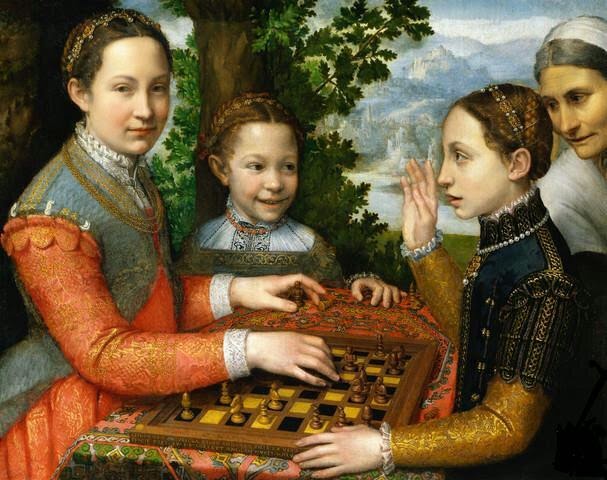
    The Chess Game by Sofonisba Anguissola is a great example of the Mannerist values of elegance and sophistication in the elite. The people themselves represent this high-class group, from the garments they wear to their rigid poses. The choice of game they play is associated with great intellect, education, and discipline. We also don’t know what the outcome of the game will be unless you actually study the pieces on the board. This shows the prioritized values of ambiguity and insider knowledge.

    Sofonisba Anguissola, The Chess Game, 1555, oil on canvas

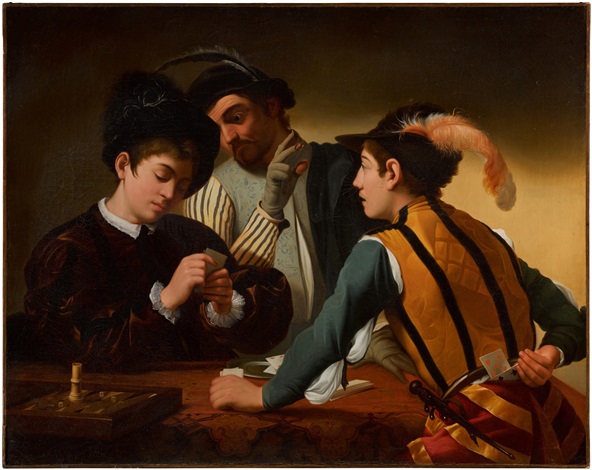
    The piece is expressive, dynamic, and emotional. Its naturalistic faces and dramatic poses make the figures feel relatable, echoing some traits of the High Renaissance. But unlike the ambiguity of Mannerism, this work presents a clear unjust narrative of cheating at a tabletop game. It invites the viewer to take sides. Its accessibility lies in how easily anyone can engage with it, without needing insider knowledge of symbolism. This clarity made it effective propaganda for drawing in a wide audience and persuading them toward Protestantism.

    Both Mannerism and Baroque show how art evolved beyond High Renaissance ideals, responding to its time while still retaining elements like elegance or naturalism. Comparing a depiction of a specific genre, like tabletop games, offers a controlled way to see how each movement redefined its values in accordance to their unique cultural and religious climates. 

    Michelangelo Merisi da Caravaggio, The Cardsharps, c. 1594, oil on canvas, 37 x 52 in.

    Citations

    The Art Story. “High Renaissance.” The Art Story, www.theartstory.org/movement/
         high-renaissance/. Accessed 12 May 2025.

    Camara, Esperança, Dr. “Baroque Art, an Introduction.” Kahan Academy,
         www.khanacademy.org/humanities/renaissance-reformation/baroque-art1/
         beginners-guide-baroque1/a/baroque-art-in-europe-an-introduction?modal=1.
         Accessed 12 May 2025.

    Kilroy-Ewbank, Lauren, Dr, and Heather Graham, Dr. “Mannerism, an Introduction.”
         Khan Academy, www.khanacademy.org/humanities/renaissance-reformation/
         high-ren-florence-rome/pontormo/a/mannerism-an-introduction. Accessed 12
         May 2025.

  • Powerful and Divine Foundations

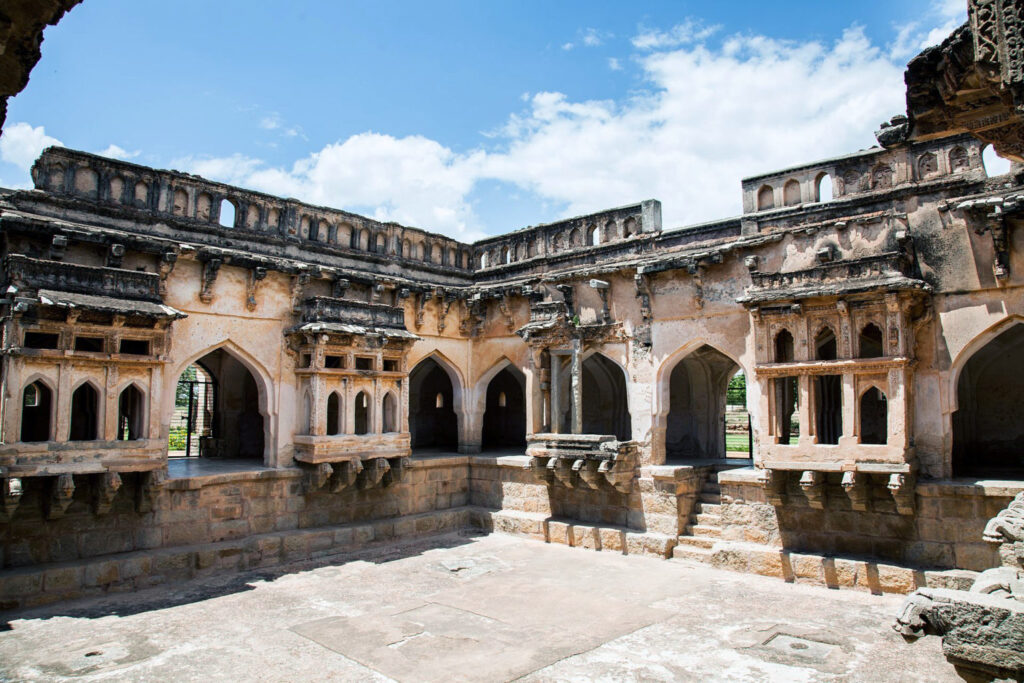
    Vijayanagara architecture blends Hindu and Islamic styles, as seen in the Queen’s Bathhouse. It reflects how the Sangama brothers, Harihara I and Bukka, shaped a distinct identity for their newly founded kingdom in response to outside Islamic influence.
    There’s some debate about whether the brothers came from the Kakatiya Kingdom or the Hoysala Empire (which eventually merged into the Vijayanagara Empire). Regardless, both these civilizations were Hindu-based and eventually overtaken by Muslim rule. In response to the Muslim invasion, the two brothers founded Vijayanagara. The rulers promoted the Hindu religion with festivals held in the capital and by building religious structures. The empire’s deep roots in Hinduism help explain architectural details such as the repeated lotus brackets on buildings, a Hindu symbol representing purity and divine beauty.

    (photo: Shivajidesai29, CC BY-SA 4.0)

    However, a question arises from the appearance of Islamic architecture, such as the pointed arches. Why would the Vijayanagara adopt these Islamic visual traits if they were resisting Muslim reign?

    One of the most likely reasons is that the empire wasn’t cut off from the rest of the world. In fact, “…kings encouraged overseas trade from coastal ports that transported local goods for the international market…” (Pai). Not only did people visit for business, but also for tourism. The kingdom was lively, and as visitors described, it was “…a prosperous and well-planned city with irrigation technology, bustling bazaars, a large standing army, and sumptuous palaces,” (Pai) even comparing it to Rome. So of course, this was a hotspot for cultural exchange, including Islamic culture. Although they were resisting Islamic rule, it would be difficult not to subconsciously pick up on some of their familiar visual traditions. Elements like pointed arches and symmetrical architecture symbolize elegance, sophistication, and divinity. It’s logical that the kings would display these values in the Queen’s Bath, a place of royal leisure.

    Alternatively, the choice to adopt a mixed Islamic and Hindu visual identity could very well have been intentional. On one hand, they were establishing Hinduism and resisting Islamic rule culturally. At the same time, they embedded Islamic architectural elements in the literal stone foundations of Vijayanagara’s most prestigious buildings, perhaps as a strategy to assert power. If they mimic the Islamic identity whose reign encompassed much of South India, then they could imply they had just as much power. Vijayanagara was trying to meet neighboring Islamic empires as an equal, so conveying that same strength through architectural language made sense for the City of Victory. This architectural blending of the two cultures reveals how imagery was used to define the “Self” in contrast to a perceived Islamic “Other,” reflecting the broader concept of imperialism as a cultural and political contest.

    Citations

    New World Encyclopedia contributors. (2023, May 3). Vijayanagara Empire. New
         World Encyclopedia. Retrieved April 24, 2025, from
         https://www.newworldencyclopedia.org/entry/Vijayanagara_Empire

    Pai, G. V., Dr. (n.d.). Art and architecture of the Vijayanagara empire. Smart
         History. Retrieved April 24, 2025, from https://smarthistory.org/
         art-and-architecture-of-vijayanagara-empire/

    Vijayanagara architecture. (n.d.). Wikipedia. Retrieved April 24, 2025, from
         https://en.wikipedia.org/wiki/Vijayanagara_architecture?utm_source=chatgpt.com

  • Defining Women Should Not Be to Define Modernism

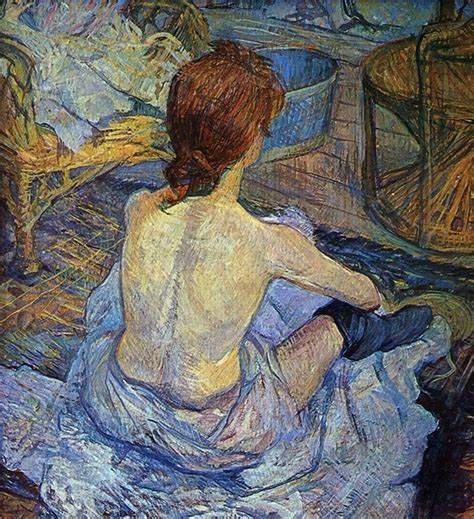
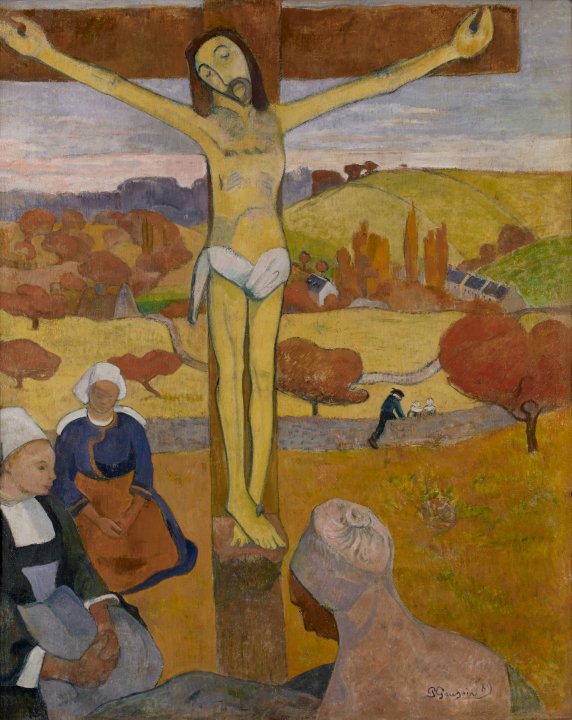
    To be modern is to challenge the present. Post-Impressionist artists did just that; they rejected tradition, embraced emotion, and redefined what art could express. As you can see to the right, this movement’s style exhibited imperfect lines and unnaturalistic colors. They were reacting to the Impressionists, who were beginning to embrace brushstrokes and color. They focused on their individual experience, opinions, and feelings about the fleeting moments in front of them, rather than focusing on the precision of what lay before them and capturing photo-identical pictures.

    What made them modern is similar to what made the Impressionists modern: “The [Impressionist] group was unified only by its independence from the official annual Salon.” These artists represented a rejected, bohemian, alternative lifestyle that the official Paris Salon could not condone. Post-Impressionists weren’t just modern for their use of brushstrokes, perspective, and color; they were also modern for their contrasting subjects or muses.

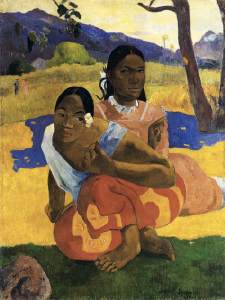
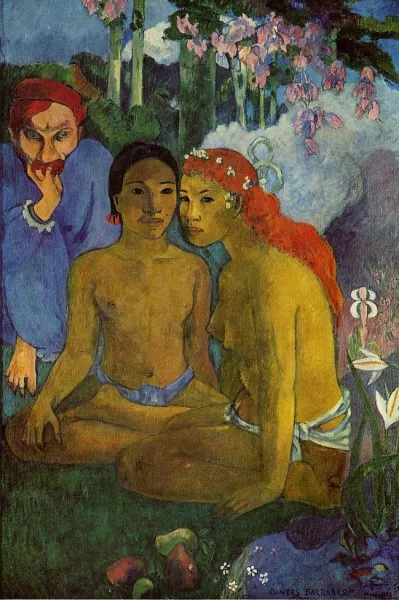
    Paul Gauguin, Contes Barbares (Primitive Tales)

    They would often paint naked women in the presence of men without a chaperone. Having a different subject from past movements set them apart—it’s what made them bohemian. It was supposed to reflect an alternative lifestyle, one that rejected societal norms. This can be seen as strides in the feminist movement because women were finally represented outside the constraints of modesty. However, having men be the dictators of how women are depicted isn’t anything new. They’re just using women to display their skill and talent, much like painting a vase. They did not care to reflect the women’s perspectives at all; instead, they depicted their own interpretation of them through their art.

    The content of Post-Impressionism bohemian art was also extremely shocking to viewers. Revolting against the Salon’s ideals consequently gained a lot of traction (good or bad) due to the shock value it had. This was an attractive reason for artists to (ironically) jump on the bandwagon and partake in the Impressionist art style. It ended up enabling the objectification of women. It reminds us of the importance to keep an eye out for artists who are simply looking for attention from that shock value—if not, they could be harming a marginalized community, as Carol Duncan said, “His freedom is her unfreedom.”

    We can relate this to one of the most popular movie production companies, Disney. Disney is currently straying away from the traditional cliché of the (white) damsel in distress, replacing her with diverse, capable women who are fearless and decisive, often with no focus on romantic entanglements with anyone. Many would agree this is a nice switch-up. Disney would be reacting to their own times by doing so. However, they are continuing a new trend of rewriting classics that don’t align with their present values, like Snow White. This begs the question: Are they doing this to correct their history of normalizing harmful stereotypes, or as a strategic move to profit off the shock value of surface-level change?

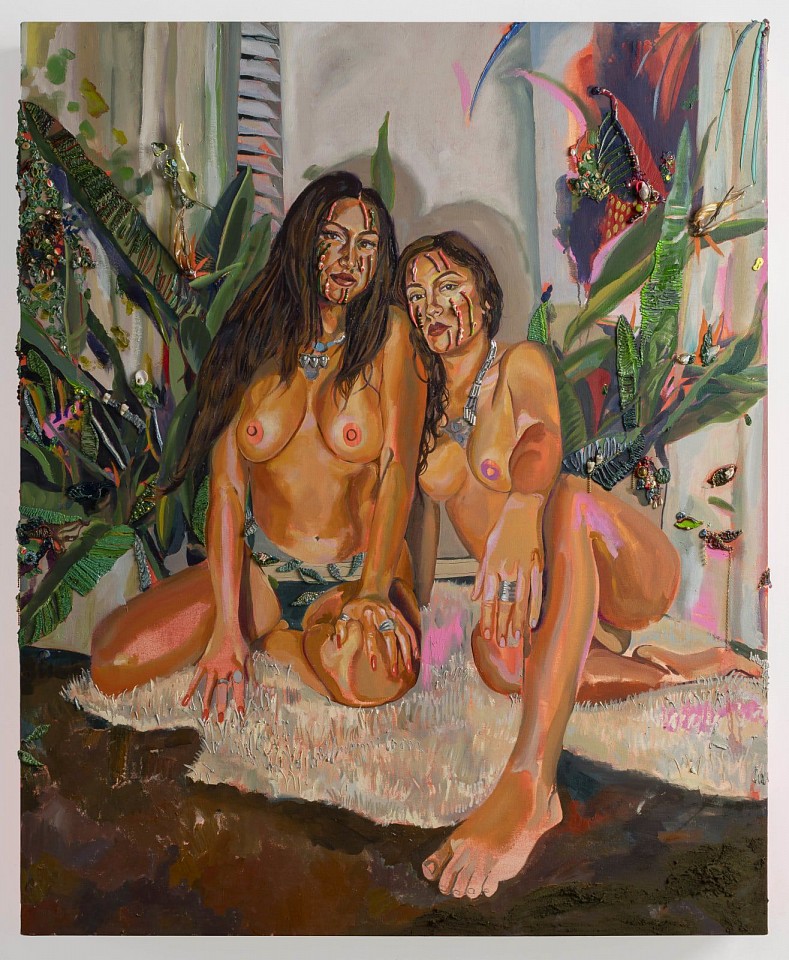
    We saw Gisela McDaniel rewrite Paul Gauguin’s Primitive Tales in her piece Chelon Tiha, doing a similar empowering revision of a misogynistic piece. So, is it not the same thing? Well, no, it’s not, for a couple of reasons. Disney could be creating new movies that excite and inspire youth; instead, they’re lazily taking older movies they have copyrights to and putting a different set of expectations on women. This implies once again that there is only one way to be a woman. Young women are getting the impression that they can’t be quiet, soft-spoken, and take on traditional feminine roles; now they can only be leaders, heroes, and take on more masculine roles. We haven’t really allowed room for women to be respected as somewhere in between. The other reason is that Gisela McDaniel is a woman who is taking back the narrative herself.

    We need to let women take the reins of their own representation. We need to create a space to allow them to show modernism through their art, instead of letting women’s expectations define modernism for that time period. That way, we don’t get a repeat of a whole movement objectifying naked women like we see in Post-Impressionism.

    Gisela McDaniel, Chelon Tiha

    Citations

    “La Toilette (Toulouse-Lautrec).” Wikipedia, Wikimedia Foundation, 17 Nov. 2024,
         en.wikipedia.org/wiki/La_Toilette_(Toulouse-Lautrec). Accessed 15 Apr.
         2025.

    “Paul Gauguin.” Buffalo AKG Art Museum, buffaloakg.org/artworks/
         19464-le-christ-jaune-yellow-christ. Accessed 15 Apr. 2025.

    “Paul Gauguin – Contes Barbares Also Known as Primitive Tales.” Paul Gauguin
         Art, www.paulgauguinart.org/
         paul-gauguin-paintings-contes-barbares-also-known-as-primitive-tales.
         Accessed 15 Apr. 2025.

    Pilar Corrias. www.pilarcorrias.com/artists/53-gisela-mcdaniel/. Accessed 15
         Apr. 2025.

    Samu, Margaret. “Impressionism: Art and Modernity.” The Met, 1 Oct. 2004,
         www.metmuseum.org/essays/impressionism-art-and-modernity. Accessed 15 Apr. 2025.

  • From Rebirth to Revenue

    The Renaissance literally translates to “rebirth,” a rebirth from a period marked by famine, war, and the Black Death. The medieval period was not a habitable era for the pursuit of art, and the art that was made had a slightly different focus in content. However, during the Renaissance, there was an upsurge in quantity and a shift in content and technique. 

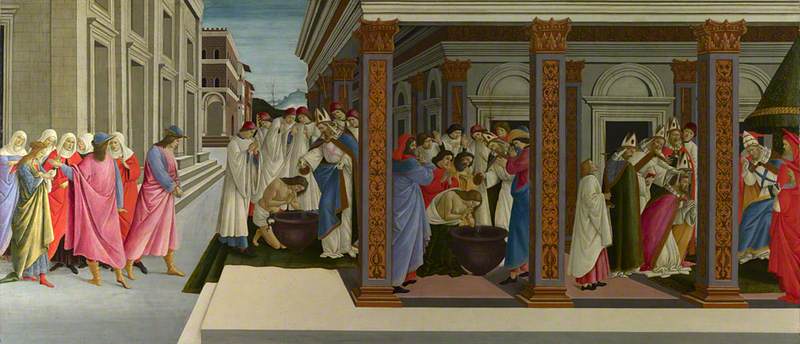
    In a time when people are less concerned with their survival, they are allowed to pursue the quality of life in leisure and entertainment. They look back to the last time when civilization was consistently thriving. This meant they were looking at the philosophers and scholars of the classical period for guidance through writing and other art. This inspired the Renaissance’s focus on religious figures, such as deities, along with historical figures. Since these are historical or spiritual figures, they didn’t just make portraits of them as we see with current rich hierarchical figures’ commissions. Instead, these artists commonly used these figures as symbols for their (or their buyer’s) political commentary, a retelling of their story, or both. With this lens, as you may predict, the paintings produce more dynamic action to give the audience more to digest than just a still face that holds no meaning. These artists also exuded a strong emphasis on antiquity-inspired values such as humanism and individual agency. This focus greatly influenced their artistic expression, often resulting in storytelling through continuous narratives. Similar to modern comics, these artworks depicted multiple moments of a story within a single composition, with characters appearing in various stages of the narrative.

    The National Gallery, London
    Sandro Botticelli, Four Scenes from the Early Life of Saint Zenobius (1444/1445-1510)

    The Four Scenes from the Early Life of Saint Zenobius uses grouping of people as gestural splits in scenes along with architecture that creates more of a literal line of separation more akin to comics.

    Renaissance and classical art is highly regarded today in architecture, philosophy, our values of harmony and balance, and the need for storytelling. Our form of storytelling is different now only due to advancements in technology where we can simply record and alter video. Our normalization and reliance on video have forced continuous narratives to die out; because why would you need continuous narrative paintings when you have a museum for moving pictures in your pocket? However, we still see ghosts of continuous narratives within our capitalist society today.

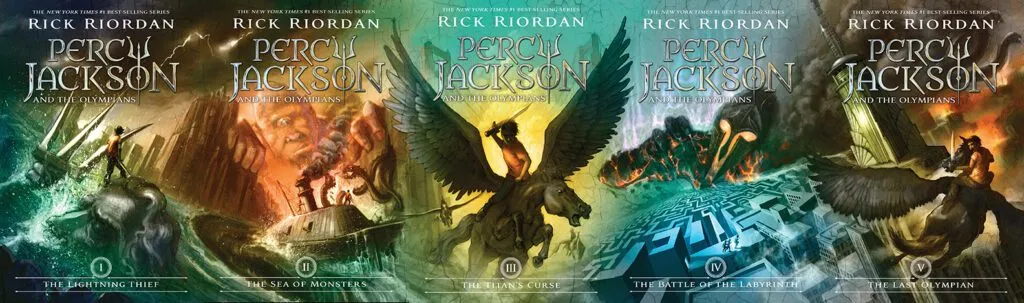
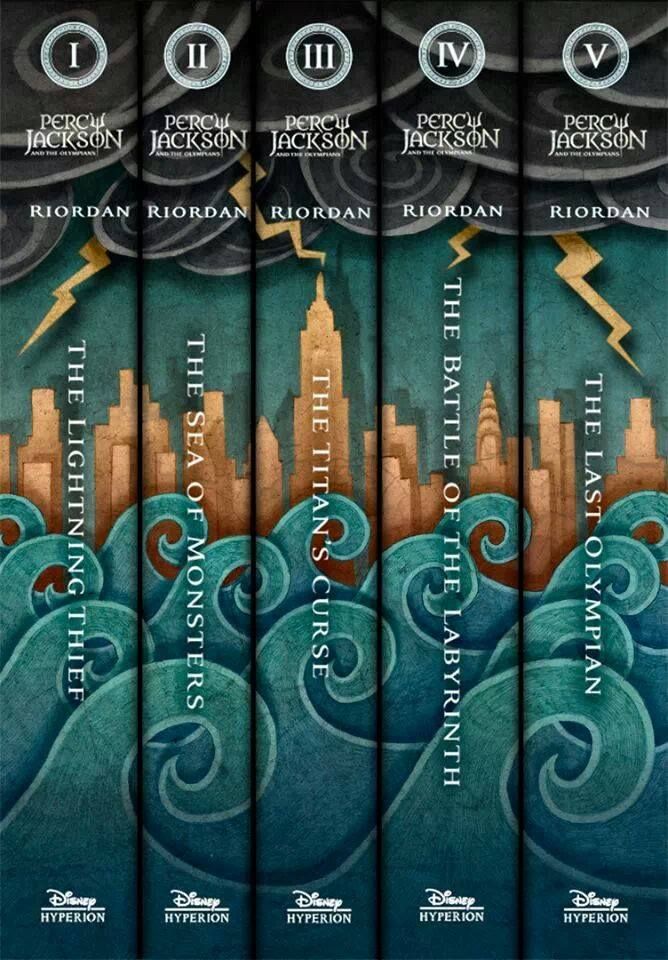
    Rick Riordan, Percy Jackson series (side by side)

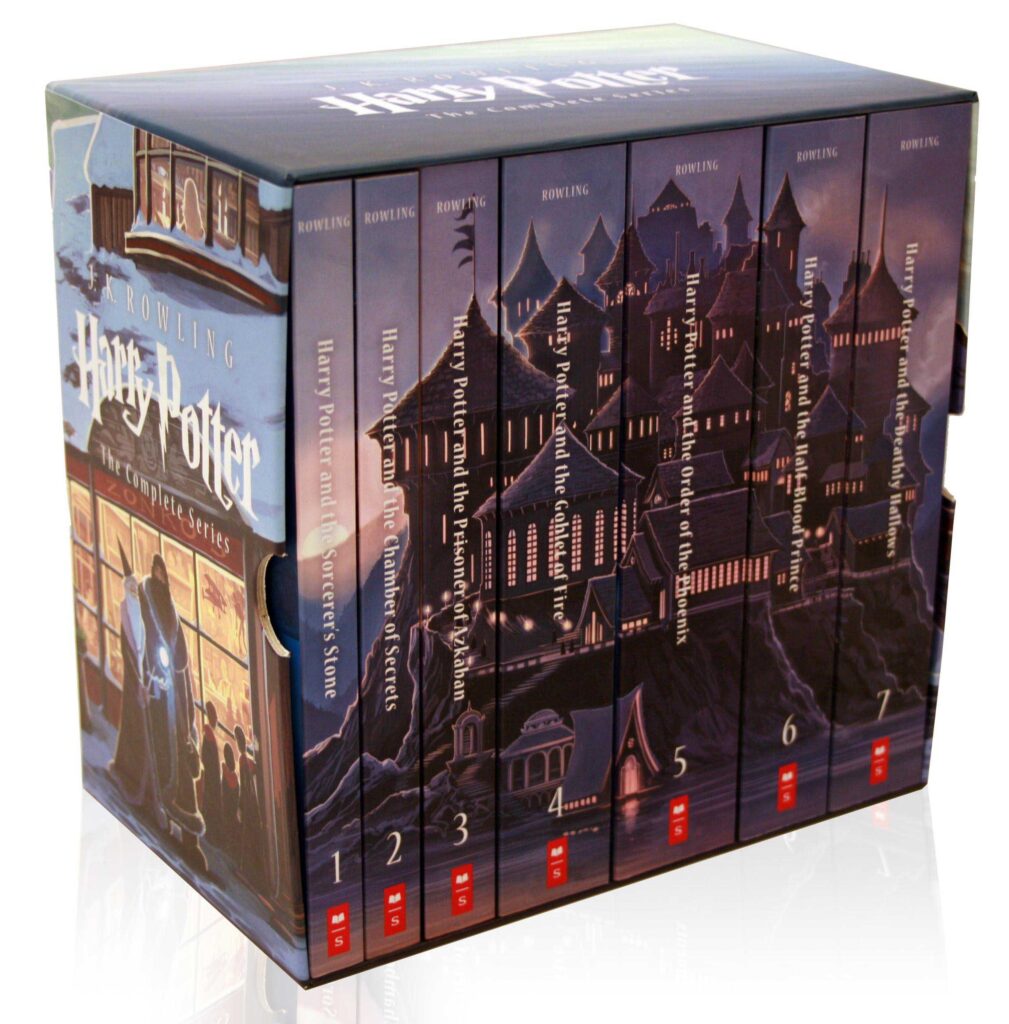
    Consider your favorite novel series, do they have matching covers and/or spines? Most do, and some even go as far as to create a depiction of the story on the cover in the continuous narrative format like how Percy Jackson does. If you have one or two of the books, there’s more of an incentive to collect the rest to complete the piece of artwork. The artist could have innocently been inspired by the classical period seeing as the story is about Greek gods and demigods, or the artist realized the appeal and variable of fear of missing out (FOMO), that matching sets have. Especially when you’re considering the audience for these books: children, specifically children with learning disabilities like ADHD or Dyslexia in mind. This audience’s first impression of the product is the picture on the cover, not the blurb on the inside of the sleeve or the title of the book, it’s the scene unfolding visually in front of them.

    We’ve known that we look back to Ancient Greece and Rome and the Renaissance to improve our society today, but it seems we also use it for consumerism culture. Especially when you consider short video clips like Instagram reels or tiktoks – which could be argued is an extension or distant relative of continuous narrative – that are being exploited to sell us products. How far will we take the privilege of being able to look to our past to feed into our corrupt capitalist culture and how long have we been doing it?

    Citations

    Continuous narrative. (n.d.). Italian Renaissance Resources. Retrieved March 1,

         2025, from https://www.italianrenaissanceresources.com/units/unit-6/

         sub-page-05/continuous-narrative/

    Wattam, A. (2023, August 15). Double take: Continuous narrative in Renaissance

         art. Art UK. Retrieved March 1, 2025, from https://artuk.org/discover/