To be modern is to challenge the present. Post-Impressionist artists did just that; they rejected tradition, embraced emotion, and redefined what art could express. As you can see to the right, this movement’s style exhibited imperfect lines and unnaturalistic colors. They were reacting to the Impressionists, who were beginning to embrace brushstrokes and color. They focused on their individual experience, opinions, and feelings about the fleeting moments in front of them, rather than focusing on the precision of what lay before them and capturing photo-identical pictures.
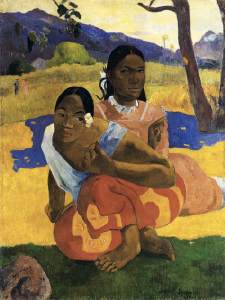
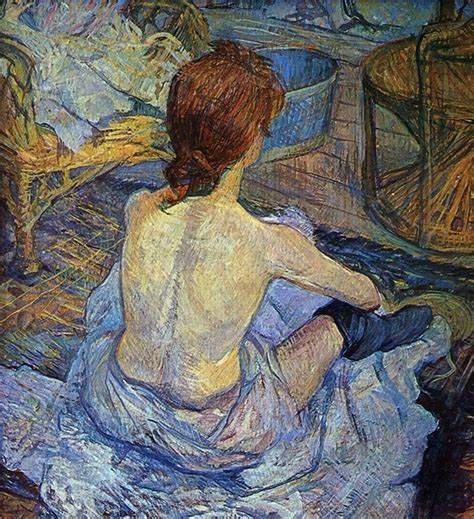
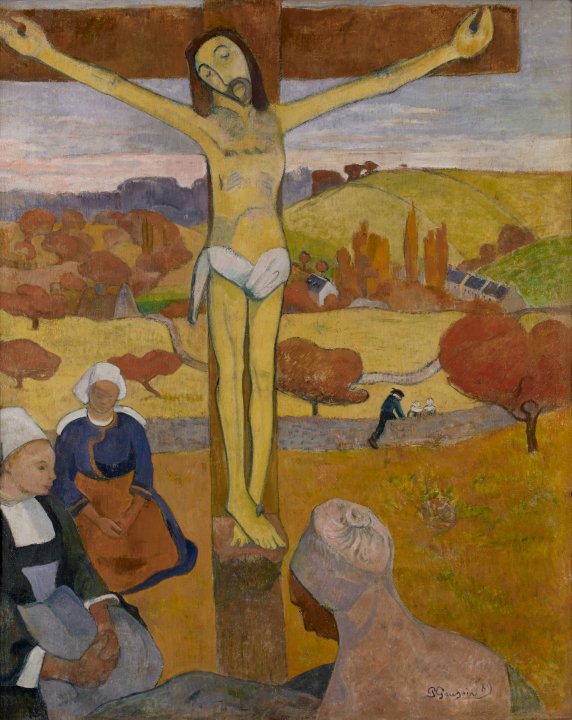
What made them modern is similar to what made the Impressionists modern: “The [Impressionist] group was unified only by its independence from the official annual Salon.” These artists represented a rejected, bohemian, alternative lifestyle that the official Paris Salon could not condone. Post-Impressionists weren’t just modern for their use of brushstrokes, perspective, and color; they were also modern for their contrasting subjects or muses.
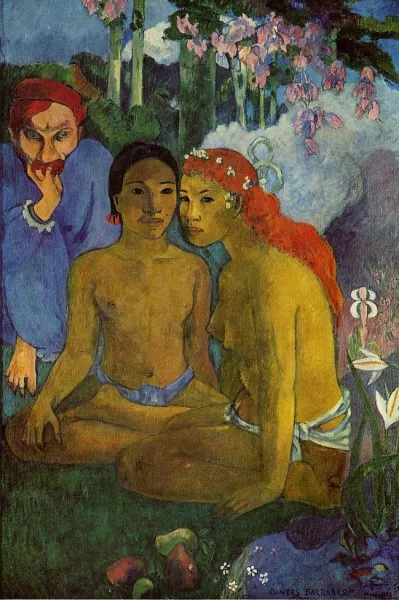
They would often paint naked women in the presence of men without a chaperone. Having a different subject from past movements set them apart—it’s what made them bohemian. It was supposed to reflect an alternative lifestyle, one that rejected societal norms. This can be seen as strides in the feminist movement because women were finally represented outside the constraints of modesty. However, having men be the dictators of how women are depicted isn’t anything new. They’re just using women to display their skill and talent, much like painting a vase. They did not care to reflect the women’s perspectives at all; instead, they depicted their own interpretation of them through their art.
The content of Post-Impressionism bohemian art was also extremely shocking to viewers. Revolting against the Salon’s ideals consequently gained a lot of traction (good or bad) due to the shock value it had. This was an attractive reason for artists to (ironically) jump on the bandwagon and partake in the Impressionist art style. It ended up enabling the objectification of women. It reminds us of the importance to keep an eye out for artists who are simply looking for attention from that shock value—if not, they could be harming a marginalized community, as Carol Duncan said, “His freedom is her unfreedom.”
We can relate this to one of the most popular movie production companies, Disney. Disney is currently straying away from the traditional cliché of the (white) damsel in distress, replacing her with diverse, capable women who are fearless and decisive, often with no focus on romantic entanglements with anyone. Many would agree this is a nice switch-up. Disney would be reacting to their own times by doing so. However, they are continuing a new trend of rewriting classics that don’t align with their present values, like Snow White. This begs the question: Are they doing this to correct their history of normalizing harmful stereotypes, or as a strategic move to profit off the shock value of surface-level change?
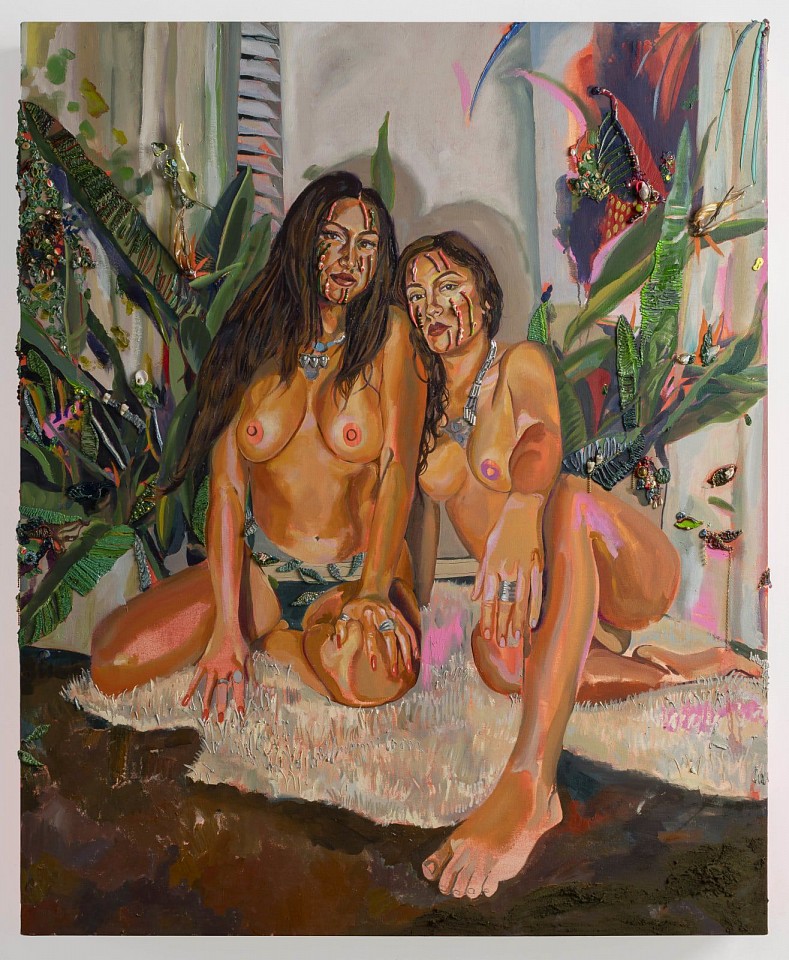
We saw Gisela McDaniel rewrite Paul Gauguin’s Primitive Tales in her piece Chelon Tiha, doing a similar empowering revision of a misogynistic piece. So, is it not the same thing? Well, no, it’s not, for a couple of reasons. Disney could be creating new movies that excite and inspire youth; instead, they’re lazily taking older movies they have copyrights to and putting a different set of expectations on women. This implies once again that there is only one way to be a woman. Young women are getting the impression that they can’t be quiet, soft-spoken, and take on traditional feminine roles; now they can only be leaders, heroes, and take on more masculine roles. We haven’t really allowed room for women to be respected as somewhere in between. The other reason is that Gisela McDaniel is a woman who is taking back the narrative herself.
We need to let women take the reins of their own representation. We need to create a space to allow them to show modernism through their art, instead of letting women’s expectations define modernism for that time period. That way, we don’t get a repeat of a whole movement objectifying naked women like we see in Post-Impressionism.
Citations
“La Toilette (Toulouse-Lautrec).” Wikipedia, Wikimedia Foundation, 17 Nov. 2024,
en.wikipedia.org/wiki/La_Toilette_(Toulouse-Lautrec). Accessed 15 Apr.
2025.
“Paul Gauguin.” Buffalo AKG Art Museum, buffaloakg.org/artworks/
19464-le-christ-jaune-yellow-christ. Accessed 15 Apr. 2025.
“Paul Gauguin – Contes Barbares Also Known as Primitive Tales.” Paul Gauguin
Art, www.paulgauguinart.org/
paul-gauguin-paintings-contes-barbares-also-known-as-primitive-tales.
Accessed 15 Apr. 2025.
Pilar Corrias. www.pilarcorrias.com/artists/53-gisela-mcdaniel/. Accessed 15
Apr. 2025.
Samu, Margaret. “Impressionism: Art and Modernity.” The Met, 1 Oct. 2004,
www.metmuseum.org/essays/impressionism-art-and-modernity. Accessed 15 Apr. 2025.
Leave a Reply