Assignment
| Category | Description |
| Formal | Create a 3D customer based product |
| Technical | Work at a smaller scale on an iterative product series· use high fire clay and glaze· Consider efficient methods for creating forms |
| Conceptual | Understand what material, time, and customer driven work needs to consider to be profitable |
Working with high fire cone 10 clay you will research products of adornment for the body. The goal is not to appropriate/reproduce an existing product but to create something of your own design.
Guidelines:
- products should be between 1-5″ in size
- be a decorative function of adornment to be worn on the body
- involve color, design, and iteration
Process
I firstly needed to think about my audience and what type of product I was going to sell. I thought about how events like Earth Jam, Autumn Fest, and Winter Market, all had very similar items: crocheted items, prints, clothes, and jewelry. I wanted to avoid going into an oversaturated market, so I didn’t want to make jewelry if possible. I thought about the current fashion trend of wearing a carabiners and thought that those people must need something more than just keys to put on them. That’s how I arrived at the keychain idea.
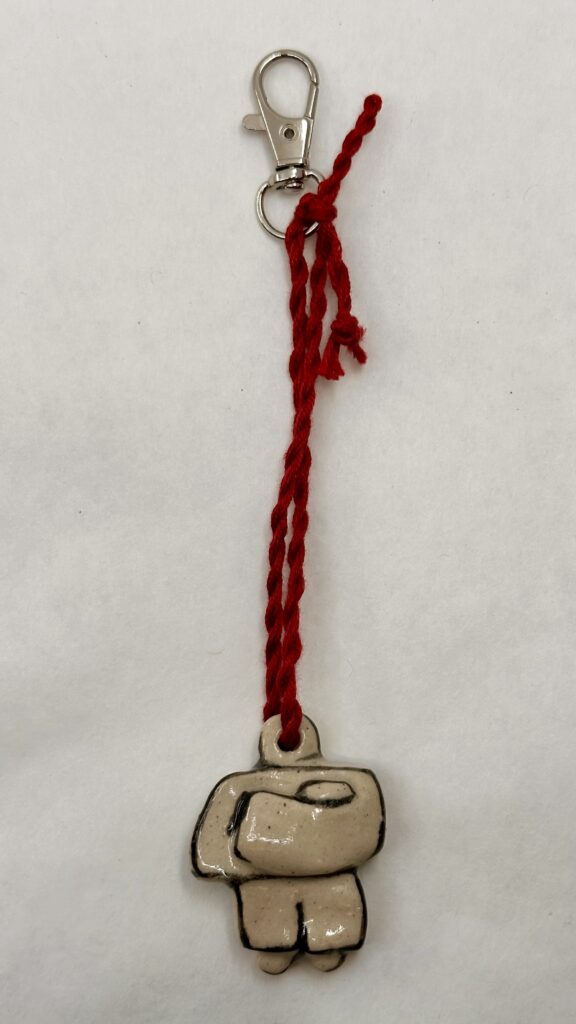
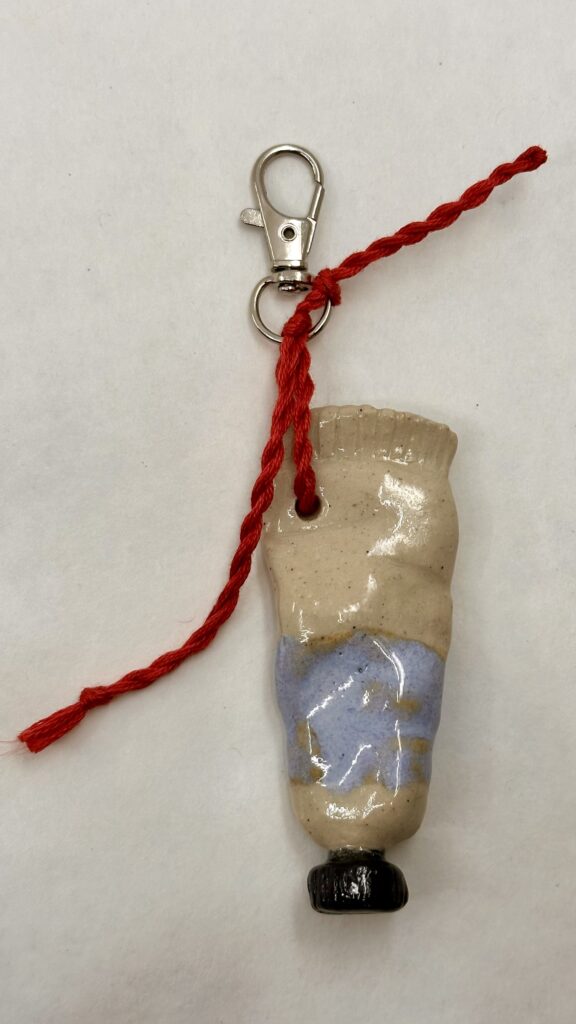
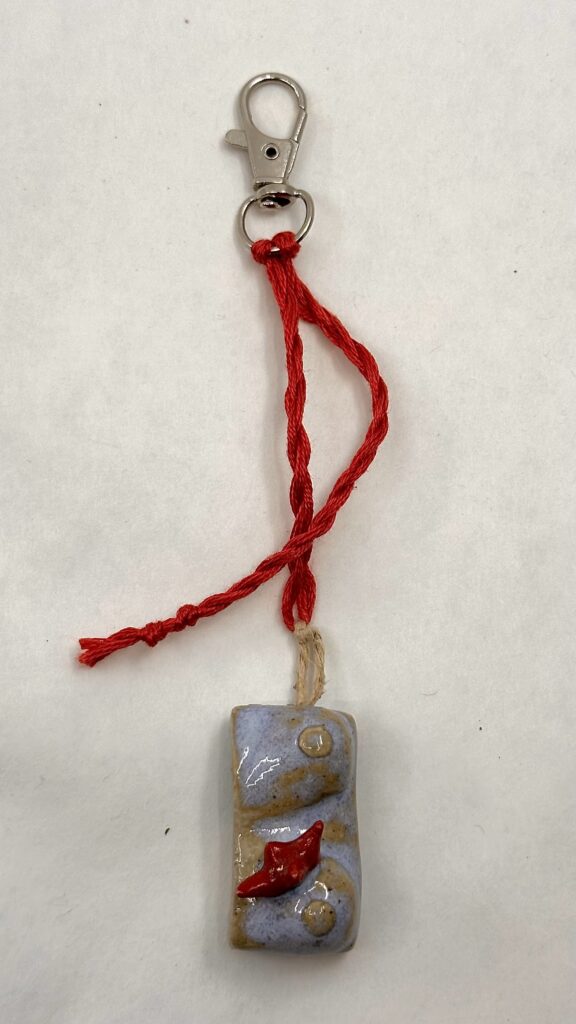
When I considered what charms to add to the keychains, I thought to myself well I’m a college student, what would I want to buy?, and that’s basically how I went about this. I made a paint tube for art kids, tomatoes and a fish for the nature type folk, and matching people charms that could be used as BFF keychains. Most of the adornments are unique to one another so the customer will feel more special and feel as they are getting something more personalized. I also threw in a couple quick-to-make abstract charm adornments for time constraints I might face. These keychains would also be occasionally paired with other strings of fabric to make the piece less simple and more dynamic.
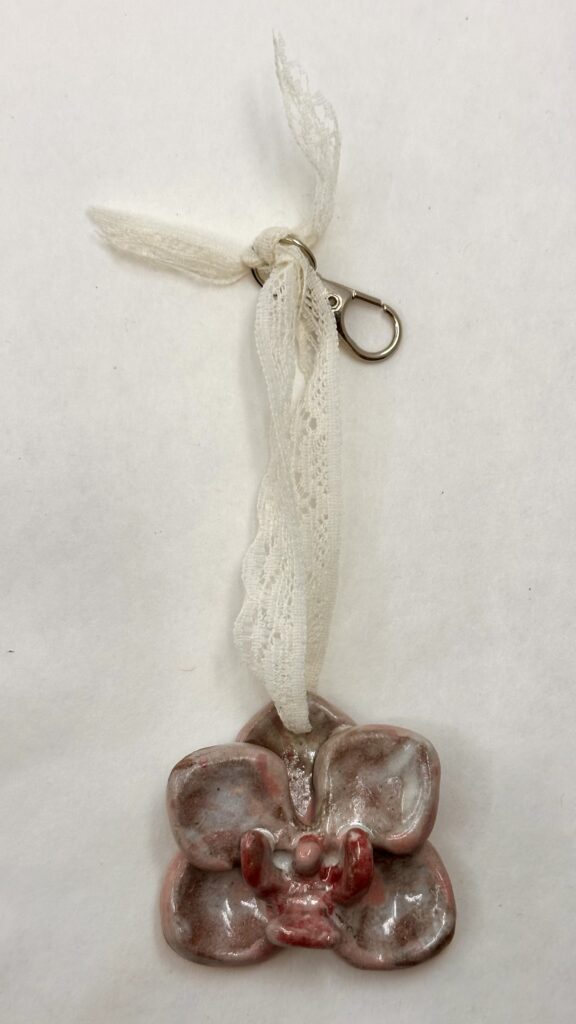
I first started off by using the low-fire clay just because I missed the announcement where we were told we could use high-fire. I soon discovered that the low-fire clay was extremely hard to sculpt on a small scale. That’s why you see all of the basic bead looking charms done with low-fire. The most complicated thing I made with the low-fire clay was the orchid, which might have even been easier to create than the sharp leaves of the tomatoes. The high-fire clay was much more cooperatable and forgiving, I was able to smooth edges much better too. After a leaf broke off one of the tomatoes, I gave myself some room to be able to ditch a charm or two by making a couple more than needed.
For glazes, I kept my color pallet simple, Taking advantage of the already made opal blue high-fire glaze to expedite the process. Unfortunately, I could not come up with up with a good enough pink in time which was truly devastating. I used blues, greens, and black and white instead which I guess work just as good.
Most of the low-fire charms weren’t loaded into the kiln despite having put them on a shelf so I didn’t end up having
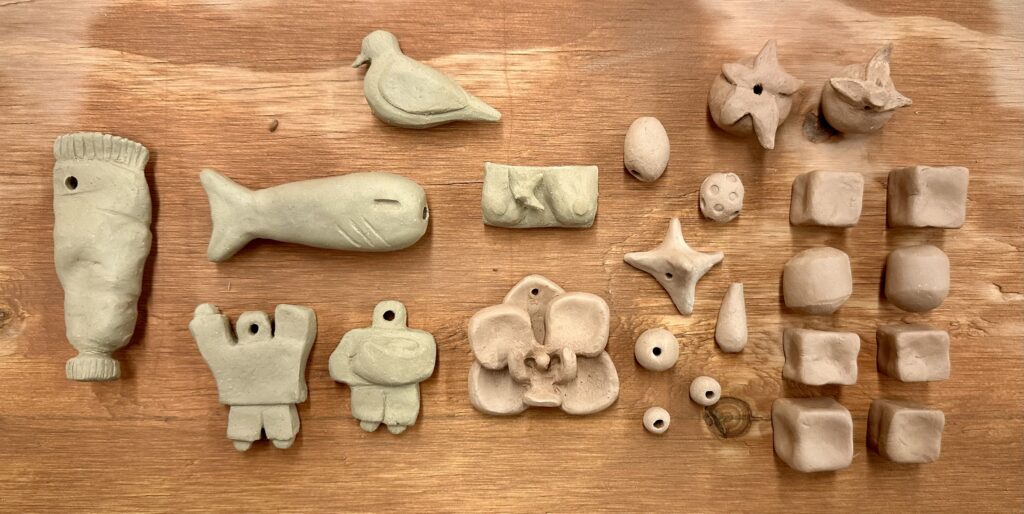
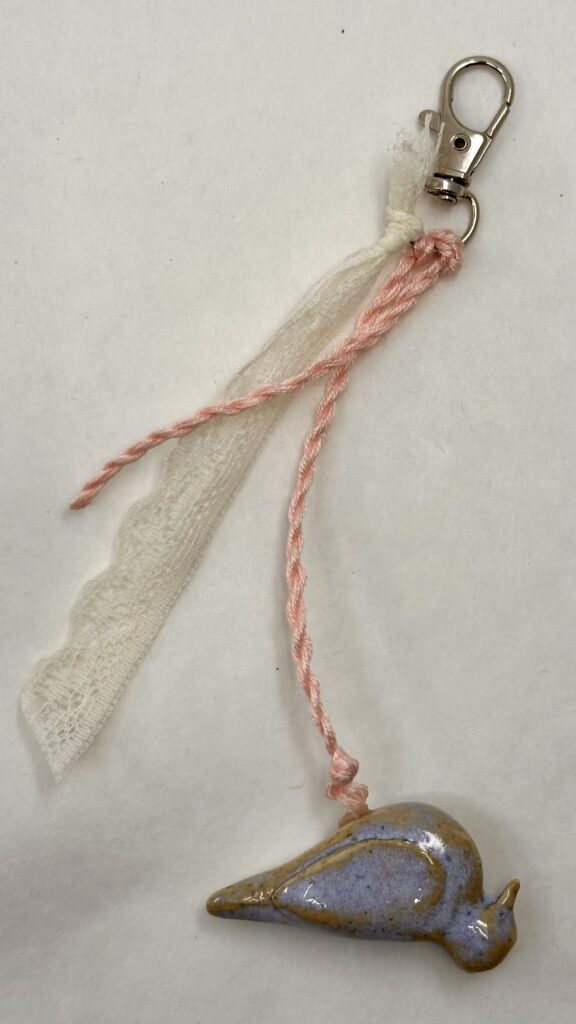
ten pieces in the end. This was disappointing since I couldn’t possibly make up for that since it was the last fire of the semester. However, I worked with what I got. I think I could have been more carful checking if there was glaze in the holes before I had loaded them into the kiln because a few of the pieces’ holes were glazed shut so I had to super glue the string instead of simply threading it through and tying it. I thought I had checked the pieces pretty well beforehand but I suppose I might have forgotten to do a double check which could have saved me a lot of time (and money since I had to buy the super glue). Making the strings/chains of the keychains was actually pretty fun too. I used some old lace I had lying around and some embroidery thread that I thrifted for a different project in the past. I just took the thread, folded it in half, twirled them together, and they naturally twist themselves in the middle to create that sturdy string. This added to the piece a lot because it gave me a chance to introduce or repeat colors into the charms.
Cost
If I were to continue making these pieces and sell them for profit, I would need to price these adornments at $37.60 each to make livable wage. This doesn’t include one time purchases like superglue for a quick fix or things like studio equipment/studio subscription. If I would to do this over a long period of time, presumably my speed at which I could make these products would increase, so I could use less time to make them, sell more for a cheaper price, and therefore sell more, and make more. This would be ideal anyway since my target audience at the moment are college students.
| Products in bulk: | Per adornment: | |
| Estimated average cost of high-fire clay: | $2.60 (1 lb) | $0.26 (given estimated weight is 1.6 ounces) |
| Keychain hooks: | $5.00 (70 pc) | $0.07 |
| Thread: | $2.00 | $0.01 |
| Labor time: | — | $37.17 (1.5 hrs, livable wage in NH) |
| Total costs: | $9.60 + livable wage | $37.60 |
Final Products
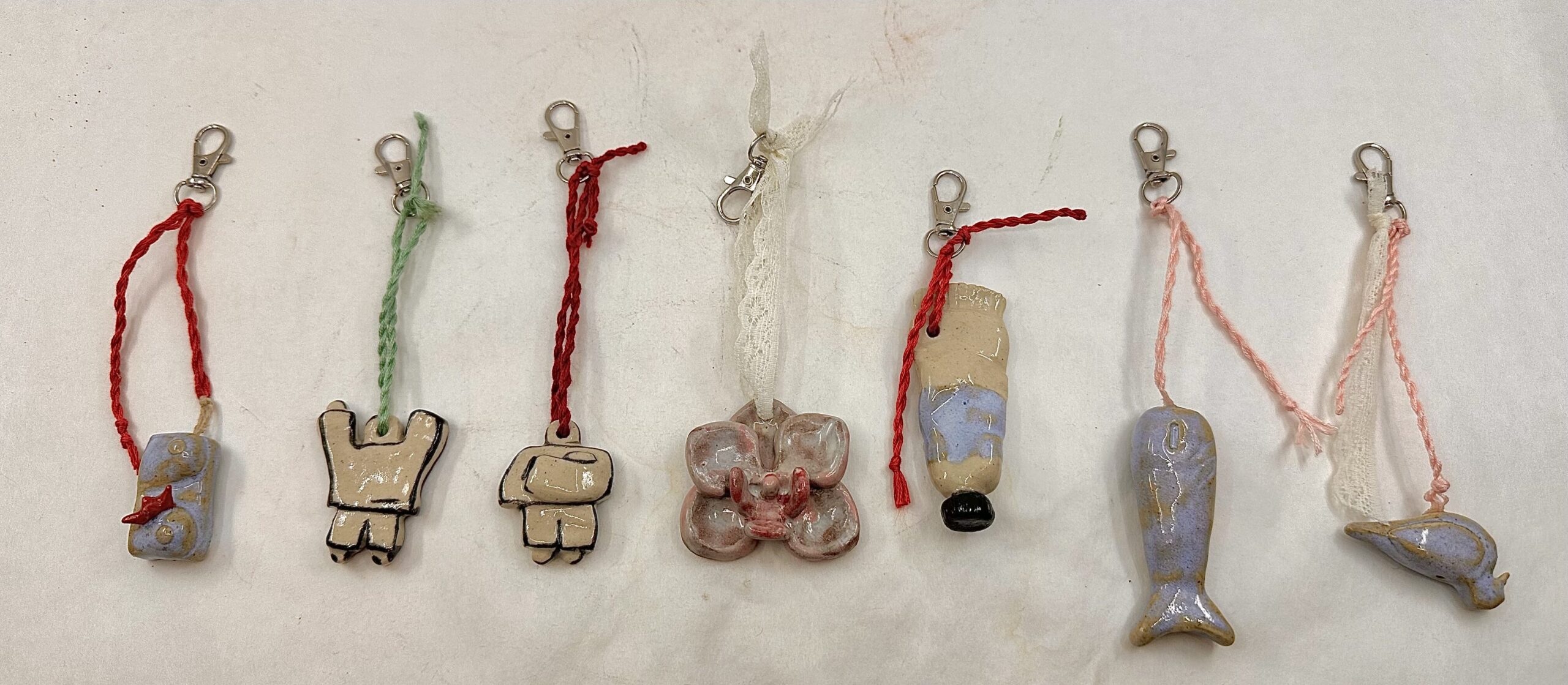
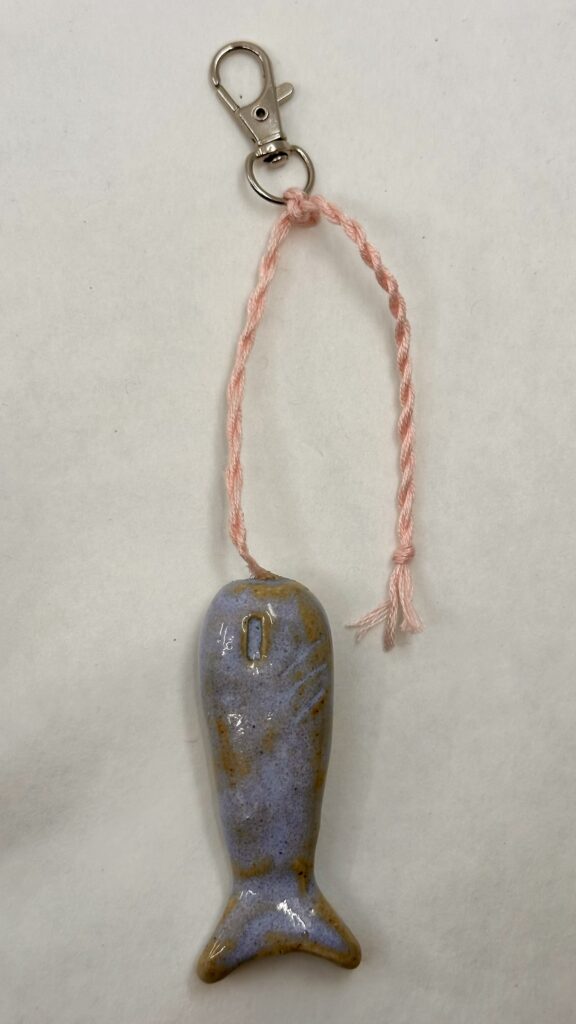
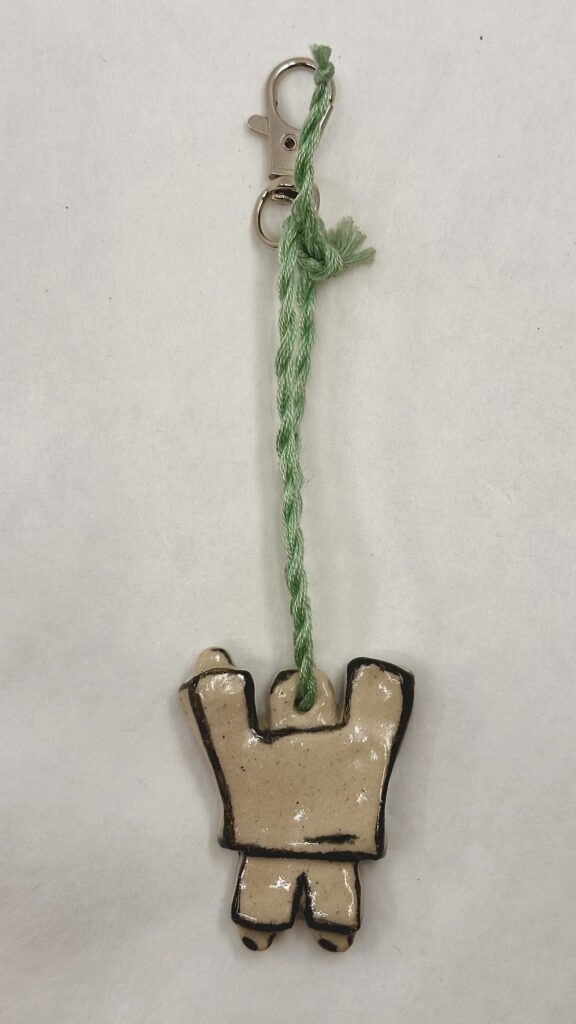
What I think makes these pieces dynamic is the contrast in color I used. I used the grey scale against bright colors in pieces like the people and paint tube. The people are completely black and white which look nice against the bright string used as the chain. The chest also is a good example of this. Although it doesn’t have black and white, the good contrast comes from the soft pale blue against the harsh bright red in the thread and spikes. Another reason this charm contrast well is because of the geometric spikes jutting out from the organic dominant shape of the chest. This also creates a good focal point for the viewer. The orchid also creates an interesting focal point using the same technique of something smaller like the saturated petals coming out from the dominate area. I believe an interesting form in itself can make an adornment dynamic; the chest, flower, and dove, are good examples of that.
Leave a Reply