The Renaissance literally translates to “rebirth,” a rebirth from a period marked by famine, war, and the Black Death. The medieval period was not a habitable era for the pursuit of art, and the art that was made had a slightly different focus in content. However, during the Renaissance, there was an upsurge in quantity and a shift in content and technique.
In a time when people are less concerned with their survival, they are allowed to pursue the quality of life in leisure and entertainment. They look back to the last time when civilization was consistently thriving. This meant they were looking at the philosophers and scholars of the classical period for guidance through writing and other art. This inspired the Renaissance’s focus on religious figures, such as deities, along with historical figures. Since these are historical or spiritual figures, they didn’t just make portraits of them as we see with current rich hierarchical figures’ commissions. Instead, these artists commonly used these figures as symbols for their (or their buyer’s) political commentary, a retelling of their story, or both. With this lens, as you may predict, the paintings produce more dynamic action to give the audience more to digest than just a still face that holds no meaning. These artists also exuded a strong emphasis on antiquity-inspired values such as humanism and individual agency. This focus greatly influenced their artistic expression, often resulting in storytelling through continuous narratives. Similar to modern comics, these artworks depicted multiple moments of a story within a single composition, with characters appearing in various stages of the narrative.
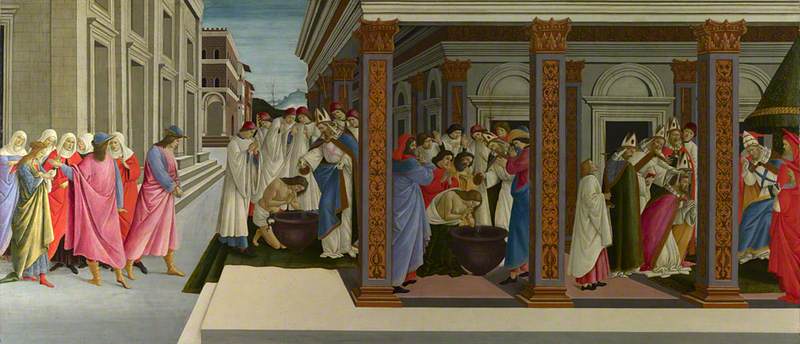
Sandro Botticelli, Four Scenes from the Early Life of Saint Zenobius (1444/1445-1510)
The Four Scenes from the Early Life of Saint Zenobius uses grouping of people as gestural splits in scenes along with architecture that creates more of a literal line of separation more akin to comics.
Renaissance and classical art is highly regarded today in architecture, philosophy, our values of harmony and balance, and the need for storytelling. Our form of storytelling is different now only due to advancements in technology where we can simply record and alter video. Our normalization and reliance on video have forced continuous narratives to die out; because why would you need continuous narrative paintings when you have a museum for moving pictures in your pocket? However, we still see ghosts of continuous narratives within our capitalist society today.
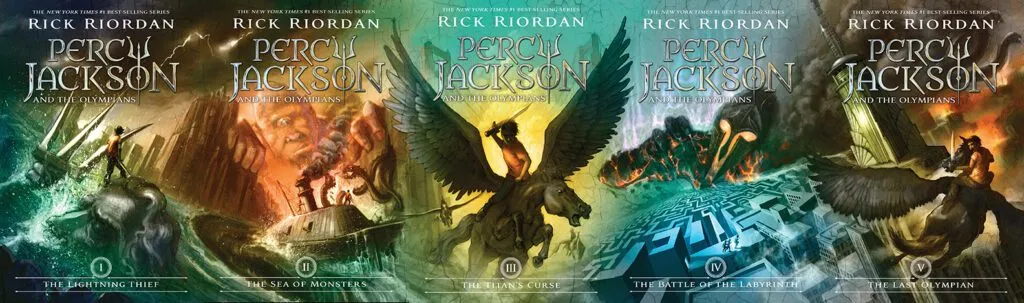
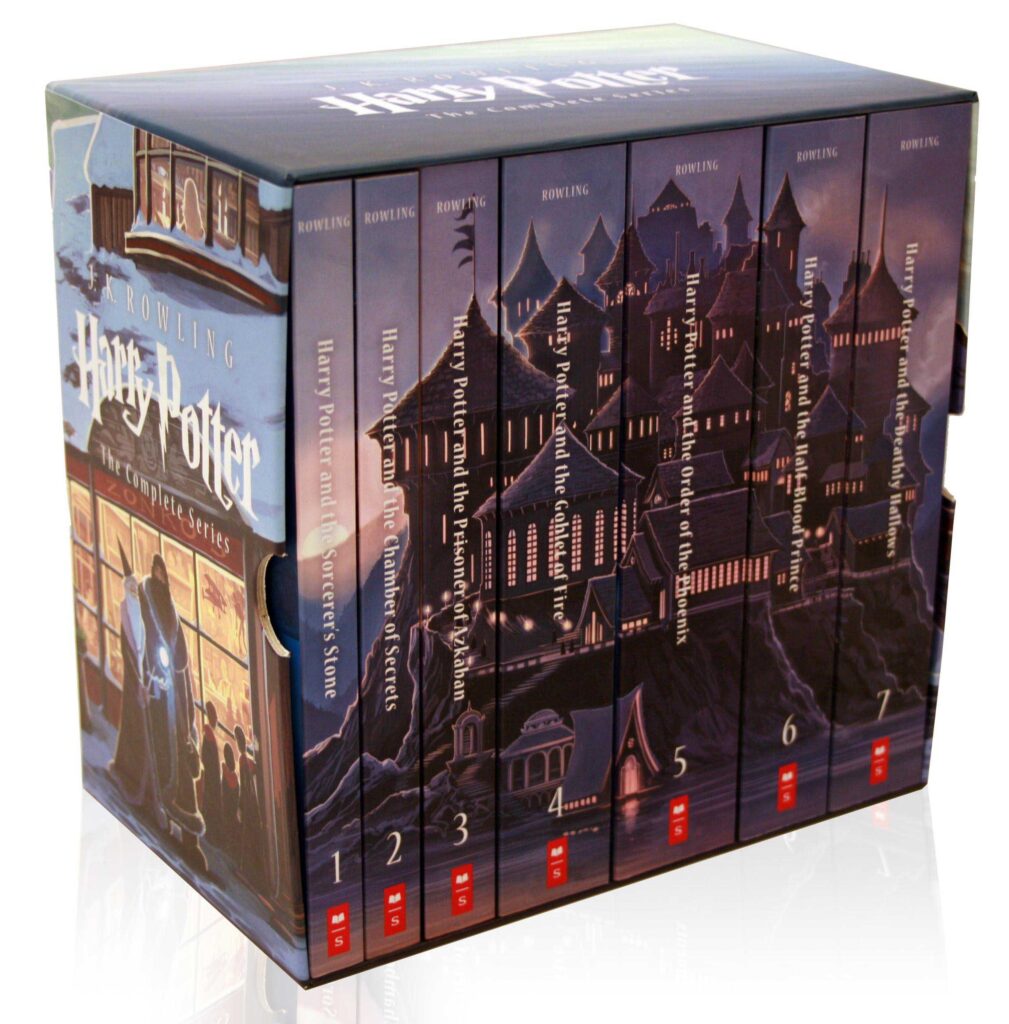
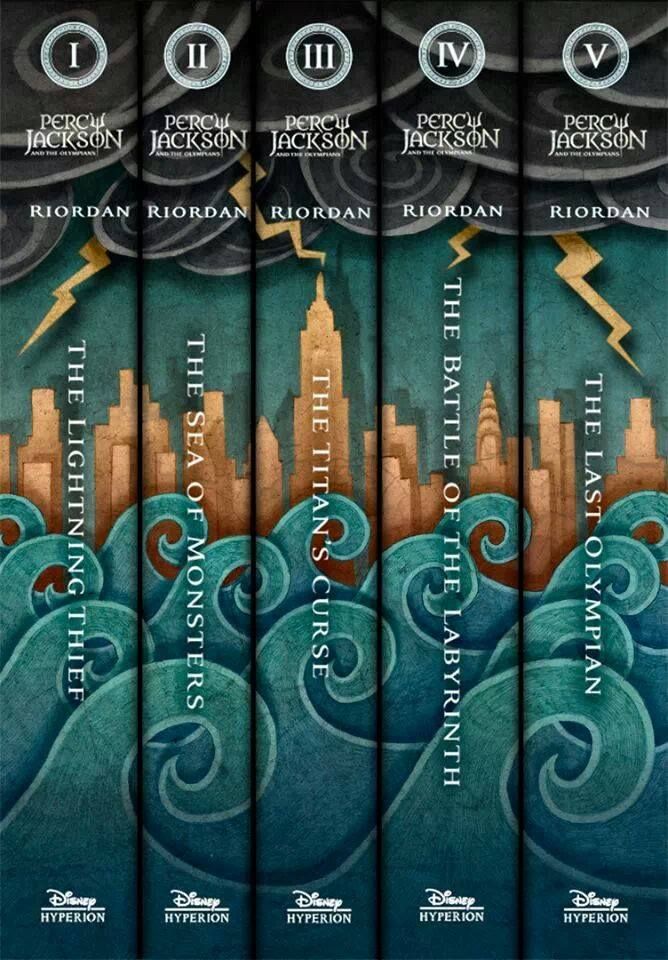
Consider your favorite novel series, do they have matching covers and/or spines? Most do, and some even go as far as to create a depiction of the story on the cover in the continuous narrative format like how Percy Jackson does. If you have one or two of the books, there’s more of an incentive to collect the rest to complete the piece of artwork. The artist could have innocently been inspired by the classical period seeing as the story is about Greek gods and demigods, or the artist realized the appeal and variable of fear of missing out (FOMO), that matching sets have. Especially when you’re considering the audience for these books: children, specifically children with learning disabilities like ADHD or Dyslexia in mind. This audience’s first impression of the product is the picture on the cover, not the blurb on the inside of the sleeve or the title of the book, it’s the scene unfolding visually in front of them.
We’ve known that we look back to Ancient Greece and Rome and the Renaissance to improve our society today, but it seems we also use it for consumerism culture. Especially when you consider short video clips like Instagram reels or tiktoks – which could be argued is an extension or distant relative of continuous narrative – that are being exploited to sell us products. How far will we take the privilege of being able to look to our past to feed into our corrupt capitalist culture and how long have we been doing it?
Citations
Continuous narrative. (n.d.). Italian Renaissance Resources. Retrieved March 1,
2025, from https://www.italianrenaissanceresources.com/units/unit-6/
sub-page-05/continuous-narrative/
Wattam, A. (2023, August 15). Double take: Continuous narrative in Renaissance
art. Art UK. Retrieved March 1, 2025, from https://artuk.org/discover/
Leave a Reply