The High Renaissance is known for its prioritized values in harmony, balance, and ideal beauty, but later movements broke from these ideals. Mannerism and Baroque responded to changing times with very different values, intellect and ambiguity, and emotion and accessibility. These differences are clear when comparing how each depicts a tabletop game.
Mannerism held strong themes of intellect, poise, ambiguity, and elegance, attributes typically associated with elite, high-ranking social groups. The movement’s elegance can be attributed to the economic, social, and political shifts of the 16th century. These themes likely reflect the rising social status of artists and the changing tastes of powerful patrons. While Mannerism was very similar to the High Renaissance in its emphasis on elegance, it differed in its lack of balance. This imbalance stemmed partly from the tension of the time, especially the growing religious conflict between Catholics and Protestants. That uneasiness is often thought to have inspired the elongated and stylized forms seen in many Mannerist artworks.
Tension between Catholics and Protestants later escalated, resulting in two distinct artistic responses during the Baroque period. The Catholics, aiming to reconnect people to the Church, commissioned grand, awe-inspiring artworks that resembled High Renaissance ideals. In contrast, the Protestants, who sought to reform both Church and religion to make them more accessible to the common man, favored theatrical, dramatic, emotional genre scenes. Both sides of the Baroque period used naturalistic figures, diagonal compositions, high-contrast lighting, and theatrical scenes to evoke emotion as a way to persuade people to adopt their faith.
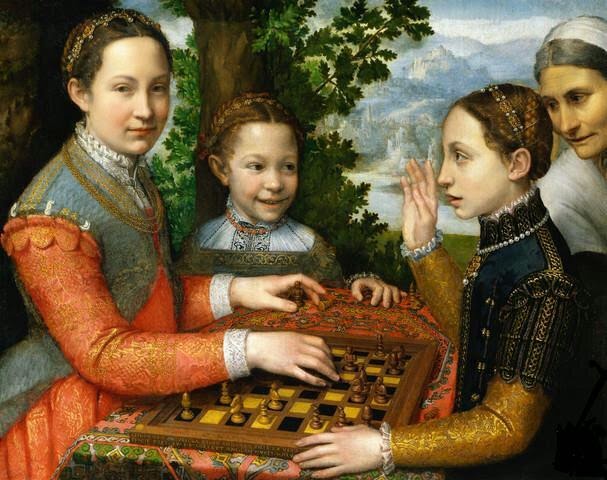
The Chess Game by Sofonisba Anguissola is a great example of the Mannerist values of elegance and sophistication in the elite. The people themselves represent this high-class group, from the garments they wear to their rigid poses. The choice of game they play is associated with great intellect, education, and discipline. We also don’t know what the outcome of the game will be unless you actually study the pieces on the board. This shows the prioritized values of ambiguity and insider knowledge.
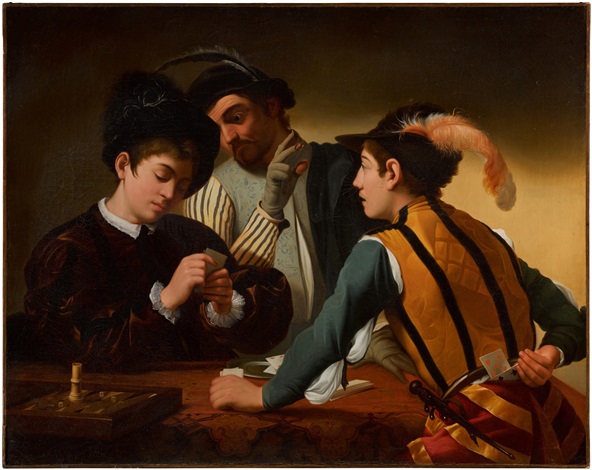
The piece is expressive, dynamic, and emotional. Its naturalistic faces and dramatic poses make the figures feel relatable, echoing some traits of the High Renaissance. But unlike the ambiguity of Mannerism, this work presents a clear unjust narrative of cheating at a tabletop game. It invites the viewer to take sides. Its accessibility lies in how easily anyone can engage with it, without needing insider knowledge of symbolism. This clarity made it effective propaganda for drawing in a wide audience and persuading them toward Protestantism.
Both Mannerism and Baroque show how art evolved beyond High Renaissance ideals, responding to its time while still retaining elements like elegance or naturalism. Comparing a depiction of a specific genre, like tabletop games, offers a controlled way to see how each movement redefined its values in accordance to their unique cultural and religious climates.
Citations
The Art Story. “High Renaissance.” The Art Story, www.theartstory.org/movement/
high-renaissance/. Accessed 12 May 2025.
Camara, Esperança, Dr. “Baroque Art, an Introduction.” Kahan Academy,
www.khanacademy.org/humanities/renaissance-reformation/baroque-art1/
beginners-guide-baroque1/a/baroque-art-in-europe-an-introduction?modal=1.
Accessed 12 May 2025.
Kilroy-Ewbank, Lauren, Dr, and Heather Graham, Dr. “Mannerism, an Introduction.”
Khan Academy, www.khanacademy.org/humanities/renaissance-reformation/
high-ren-florence-rome/pontormo/a/mannerism-an-introduction. Accessed 12
May 2025.
Leave a Reply